At school, your parents got everything: reports home each term, parents’ evenings, a phone call if you skipped class. Then you arrive at university, you fail a January exam, and your mum rings the department to ask what happened — and hits a wall. The administrator is polite, sympathetic, and completely immovable: they cannot discuss your studies with her. Not the mark, not whether you passed, not even — at some universities — whether you are actually a student there.
So can parents see university grades in the UK? The short answer is no: universities cannot share your marks with your parents without your consent. Your grades are your personal data, protected by the UK GDPR and the Data Protection Act 2018, and your parents have no automatic right to see them — not because they raised you, not because they top up your rent, and not because they handed their payslips to Student Finance England. This guide explains the rule, the narrow exceptions, and — because money and marks get confused constantly — exactly what student finance does and does not tell your parents about you.
One clarification before we start: this article is about universities telling your parents. Nothing stops you from showing your parents your own grades yourself — your student portal, your transcript and your Higher Education Achievement Report are all yours to share or withhold. The lock is on the university’s filing cabinet, not on your phone screen.
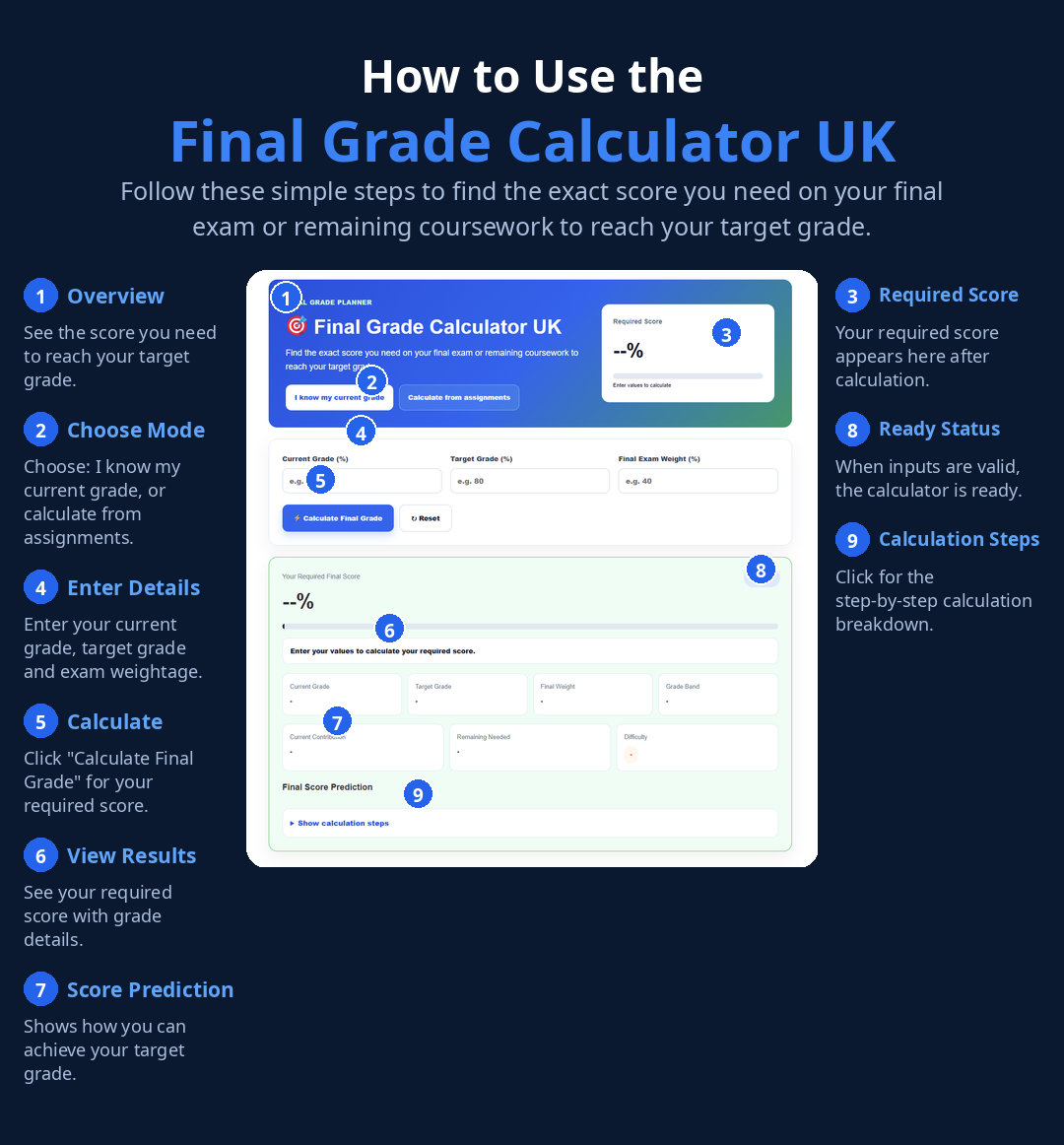
Click Here: Final Grade Calculator UK
The Short Answer: Your Grades Are Legally Yours
The moment you enrol at a UK university, the legal relationship changes. You are no longer a school pupil whose parents are the institution’s natural point of contact — you are an adult contracting directly with the university, and the university becomes a data controller holding your personal data. Your module marks, your exam results, your degree classification: all of it is personal data under the UK GDPR, and the university needs a lawful basis to share it with anyone who is not you. “My mum is worried” is not a lawful basis.
Universities say this out loud on their parent-facing pages, precisely because the phone calls never stop. The University of Nottingham tells parents: “We treat all students as mature and independent adults, and this means treating their information confidentially. We cannot discuss issues such as your child’s university application, academic progress, finances or health with you without their consent.” Plymouth Marjon University is blunter still: “University staff cannot discuss specific matters relating to individual students with a third party without written consent, even if this third party is a close relative.” The University of Northampton gives the same rule to its international families: “under UK Data Protection laws, our staff cannot discuss any aspect of your child’s experience here at UON with you unless they provide written permission.”
The University of Exeter shows how far the principle reaches. Its accommodation team tells parents that under GDPR it cannot provide any information to parents or other third parties — “this includes confirming whether the person you are calling about is or will be a University of Exeter student, their accommodation application or offer, or their time in residency.” That is the default posture across the sector: no confirmation, no denial, no discussion, unless you have said otherwise.
Notice what this means in practice. It is not only your final degree classification that is protected — it is every layer beneath it: individual module marks, exam-board decisions, extenuating-circumstances outcomes, appeal results, and even the attendance and engagement data that universities now monitor closely (see our guide to how attendance connects to grades). All of it sits inside the same confidential student record.
The One Door That Opens: Your Written Consent
There is exactly one routine way for a parent to discuss your studies with your university: you open the door yourself. Most universities run a third-party disclosure or nominated-contact process — a form, held by student services or the registry, on which you name who may be spoken to and about what. With that form on file, the same administrator who stonewalled your mum in January can suddenly discuss your extenuating-circumstances claim with her in March.
Three things worth knowing about consent. First, it should be specific: you can authorise discussion of your EC application, or your accommodation account, without authorising a tour of your entire academic record — and narrow consent is always the safer choice. Second, many universities want it in writing (Marjon’s parent page specifies “written consent”), because a verbal “yeah, talk to my dad” over the phone is hard to evidence later. Third, consent is revocable: data-protection law requires that withdrawing consent be as easy as giving it, so a short written note to the team holding the form ends the arrangement going forward.
When does consent actually help? The classic case is a student going through a rough patch who wants a parent involved — an extenuating-circumstances claim where a parent holds the medical evidence, a fee query where the parent is the one paying, or an accommodation dispute the student would rather not handle alone. Consent turns the university’s silence from a barrier into a bridge, on your terms.
The Rare Exceptions: When Universities May Share Without Asking
Consent is the routine route. Beyond it, universities’ privacy notices list a small set of narrow situations where they may share personal data without asking you first — and none of them is “your parents asked nicely.” The main ones:
Protecting someone’s life or safety. If staff believe you or someone else is at serious risk, they can share what is necessary to protect you — this is the “vital interests” basis in data-protection law, and it is why universities ask for an emergency contact at enrolment. Nottingham’s parent page nods to exactly this: “The university does not ordinarily communicate with students’ parents or family members — although you may be contacted in very rare circumstances if you are nominated as an emergency contact.” Note the double qualifier: very rare circumstances, and only the nominated contact.
Legal obligations. Court orders, statutory reporting duties and crime-prevention requests can compel disclosure — but these run to courts, regulators and the police, not to parents. A fraud investigation might see your records shared with investigators; it will not see them shared with your family.
Professional and safeguarding duties. On regulated courses, fitness-to-practise processes can involve sharing relevant information with professional bodies. And if you start university under 18, safeguarding duties are stronger: some providers state they will share basic education details with those holding parental responsibility unless there is a reason not to. The under-18 rules vary by provider and end on your 18th birthday — check your own university’s safeguarding policy rather than assuming.
What is conspicuously not on the list: academic failure, poor attendance, unpaid fees, or a parent’s anxiety. A failed module, a referral, even a required withdrawal — none of these unlocks parental disclosure. The confidentiality duty does not switch off because the news is bad; if anything, staff guard sensitive outcomes more carefully.
Worked Example 1: The Phone Call That Goes Nowhere
Daniel, a second-year, scores 38% on a 20-credit module and is referred. His dad — who is paying Daniel’s accommodation top-up — rings the departmental office and asks for Daniel’s mark and what happens next. Here is what happens, step by step:
Step 1: identity check. The administrator asks who is calling and their relationship to the student. Daniel’s dad answers honestly. Step 2: the consent check. The administrator looks for a third-party disclosure form on Daniel’s record. There is none. Step 3: the refusal. The administrator explains — politely, using the published policy wording — that under data-protection law the university cannot discuss an individual student’s academic record with a third party without the student’s consent. No mark is given, no referral confirmed, no advice about resits offered to the dad. Step 4: the redirect. The administrator suggests Daniel contact student services himself, and mentions that Daniel can complete a disclosure form if he wants his dad involved.
Now the counterfactual: suppose Daniel had completed the disclosure form in October, authorising discussion of “academic progress and extenuating circumstances” with his dad. The same phone call in February goes completely differently — the administrator verifies the caller’s identity against the form and can discuss the 38%, the capped resit, and the referral timeline. Same dad, same worry, same university: the only thing that changed is a signed piece of paper. That is what consent is worth in this system — it is the entire difference between a wall and a door.
Money vs Marks: What Student Finance Tells Your Parents
Here is where most families get confused, because student finance genuinely does involve your parents — deeply. If you are a dependent student (under 25 and financially dependent on at least one parent), Student Finance England assesses your parents’ household income to set your maintenance loan. For 2026/27, SFE looks at the tax year starting April 2025, confirms the figures with HMRC, and applies two published thresholds: household income of £25,000 or under gets the maximum maintenance loan, while income over £42,875 triggers an “Assessed Contribution” — the government’s estimate of what the household can contribute toward living costs. If income has dropped by 15% or more, parents can ask for a reassessment on the current year. The tuition fee loan (up to £9,790 a year in 2026/27) is not means-tested at all and goes straight to the university.
So parents hand over payslips, P60s and sometimes a small forest of paperwork — and understandably conclude they must be entitled to see what all that money is buying. They are not. The information flow is strictly one-way: your parents’ finances flow into the assessment, and nothing about your academic life flows back out. SFE tells your parents nothing about your marks, your attendance, your module choices, or whether you are on track to graduate. Your loan entitlement depends on household income and your enrolment status — not a single grade you have ever earned.
The same one-way logic applies at the payment end. The maintenance loan is paid directly to you, the student — not to your parents — and how you spend it is your business. The tuition fee loan is paid directly to the university once you have started the course. At no point in this chain does anyone send your parents a statement linking money to marks, because no such link exists in the system.
Worked Example 2: The Assessed Contribution
Amara lives away from home. Her household income for the relevant tax year is £30,000 — above the £25,000 line for the maximum loan, below the £42,875 line where the formal Assessed Contribution kicks in. Her maintenance loan is therefore reduced on a sliding scale: she receives less than the maximum, and the government expects the household to bridge the gap. Her parents, seeing a smaller loan landing in her account, assume they are entitled to check she is “worth it” — and ring the university. They get the same answer as Daniel’s dad: nothing, without Amara’s consent.
Now change one number: household income of £48,000. SFE applies the Assessed Contribution — its published estimate of what the household can contribute — and Amara’s loan shrinks further while her parents’ expected contribution grows. The parents’ financial stake is now several thousand pounds a year, and their legal right to see her grades is still exactly zero. That asymmetry surprises families every September, but it is the system working as designed: SFE assesses ability to pay, the university assesses academic achievement, and the two assessments never meet.
Who Else Can See Your Grades? The Permission Matrix
Parents are only one entry in a wider map. Here is who can see what — and on what legal footing:
| Who | What they can see | The legal footing |
|---|---|---|
| Your parents / family | Nothing, by default — not marks, not attendance, not enrolment status | Your consent (third-party disclosure form), or a genuine emergency via your nominated emergency contact |
| Student Finance England | Your enrolment status and household income data — never your grades | Statutory student-support assessment; one-way flow confirmed by SFE’s published guidance |
| Future employers | Award, classification and dates of study — only with your consent, and never module marks by default | Graduate-consented verification via HEDD; see our employers and classification guide |
| Your apprenticeship employer (if any) | Attendance and course progress where the employer pays your fees | The training agreement you signed at enrolment — agreed upfront, not sprung on you |
| Partner / exchange university | The marks needed to award credit for your exchange period | Data-sharing agreement between the institutions, covered in your exchange paperwork |
| Your emergency contact | Only what is necessary in a genuine emergency | Vital-interests basis; Nottingham describes this as “very rare circumstances” |
| You | Everything: marks, transcripts, exam-board outcomes, HEAR | It is your personal data — subject-access rights under the UK GDPR |
Two rows deserve emphasis. First, the employer row: graduate employers do check degrees — around one in five run verification — but the check is consent-based and confirms the award, not your second-year essay marks. Second, the apprenticeship row is the genuine outlier: if an employer is funding your degree apprenticeship, progress-sharing was part of the deal from day one. Everyone else on the list starts from “no”.

How to Share Your Grades Yourself: Five Steps
Sometimes you want your parents to see your grades — to celebrate, to explain a funding decision, or just to stop the speculation. You do not need the university’s permission to share your own data. Five practical routes:
1. Show them your student portal. The fastest option: log in together and walk through your module marks. No forms, no waiting, and you control exactly which screens they see. 2. Download your unofficial transcript. Most student records systems let you export a marks summary as a PDF — cleaner than screenshots and harder to misread. 3. Order an official transcript. If a parent needs something formal (for example, to satisfy a family sponsor or a scholarship body), universities sell certified transcripts — typically around £10–£30 with a few days’ turnaround. 4. Use your HEAR. The Higher Education Achievement Report bundles your academic record with verified extracurricular achievements; it is the closest thing UK universities issue to a sealed record. 5. Redact before you share. Screenshots of portals often show your student ID number, date of birth or home address in the header — crop those out before anything leaves your phone, especially if the image might be forwarded.
A note on screenshots for the anxious: a screenshot you send is a copy, not a live feed. Your parents cannot refresh it, cannot see updates, and cannot follow links into your record. If you want ongoing visibility — say, a parent tracking a final year — the disclosure form from the consent section is the proper route, not a monthly screenshot ritual.
Five Myths vs Reality
| The myth | The reality |
|---|---|
| “My parents pay my fees, so the uni has to tell them my grades.” | No. In England the tuition fee loan comes from Student Finance England, not your parents — and even direct fee-payers buy no right to academic data. |
| “The university emails parents if you fail.” | No. No UK university routinely notifies parents of fails, referrals or withdrawals. Bad news travels to you, not to them. |
| “SFE reports my grades back to my parents.” | No. SFE assesses household income and confirms enrolment. It holds and shares zero academic data about you. |
| “Employers can just look up my degree.” | No. Verification runs through HEDD with your consent and confirms the award — not your module marks. |
| “It’s different if I’m 17 when I start.” | Partly true — and only partly. Under-18 safeguarding rules can allow limited sharing with parental-responsibility holders at some providers, but the details vary and the exception ends at 18. Check your university’s policy. |
Can my parents call my university and ask for my grades?
No — not without your permission. UK universities treat students as independent adults, and under UK data-protection law your marks are your personal data. Staff at universities including Nottingham, Exeter and Plymouth Marjon publish the same rule: they cannot discuss your academic progress, finances or health with a parent or any other third party unless you have given consent. If your parents call, the most they will be told is that the university cannot discuss individual students.
Will my university tell my parents if I fail a module?
No. Failing a module, being referred, or being asked to repeat a year does not trigger any parental notification. The university’s duty of confidentiality does not switch off because the news is bad — if anything, staff are more careful with sensitive academic outcomes. The only people routinely told about a fail are the ones who need to act on it: you, your exam board, and — where relevant — your sponsor or placement provider.
Do my parents see my grades through Student Finance England?
No. Your parents may have to hand over detailed income evidence so Student Finance England can means-test your maintenance loan, but the information flow is one-way: SFE tells your parents nothing about your marks, your attendance, or whether you are passing. Your loan entitlement is based on household income and your enrolment status, not your grades.
Can my parents see my attendance record?
Not directly. Attendance and engagement data sits inside the same confidential student record as your marks, so a parent cannot request it any more than they could request your essay grades. The one partial exception is apprenticeships: where an employer pays your fees, the provider may share attendance and progress with that employer under the training agreement — but that is the employer, not your parents, and it is agreed at enrolment.
What if I start university under 18?
The picture is slightly different. Universities still treat you as the student, but their safeguarding duties are stronger for under-18s, and some providers state that they will share basic education details with those holding parental responsibility unless there is a reason not to. Check your own university’s under-18 or safeguarding policy — the rules vary by provider, and they change the day you turn 18.
Can an employer check my degree without asking me?
No — not legitimately. Employers verify degrees through services like HEDD, and the check only runs with the graduate’s consent. HEDD confirms the award, the classification and the dates of study; it does not hand over module marks, and it does not run behind your back. Our guide to whether your degree classification matters to employers explains exactly what gets checked.
How do I give my university permission to talk to my parents?
Ask your student services or registry team for their third-party disclosure or nominated-contact form — most universities have one. You specify who may be spoken to and about what (for example, discussing an extenuating-circumstances claim, or accommodation matters), and you can usually limit it to named topics rather than opening your whole record. Keep a copy, and remember you can withdraw the permission later.
Can I stop my university sharing my information after I gave consent?
Yes. Consent under UK data-protection law must be as easy to withdraw as it was to give. Tell the team that holds your consent form — usually student services or the registry — in writing that you are withdrawing it, and keep the confirmation. The withdrawal applies going forward; it does not retroactively make lawful disclosures unlawful, which is another reason to keep consent narrow and specific in the first place.
Conclusion
The rule is simple enough to fit on a fridge magnet: at a UK university, your grades belong to you. Data-protection law puts your parents on the same footing as any other third party — no consent, no conversation — and the universities publish that rule precisely because families keep testing it. The exceptions are narrow by design: your own written permission, a genuine emergency, or a legal duty that runs to courts and regulators rather than to the family WhatsApp group.
Two practical moves follow from the rule. If you want a parent involved — for an extenuating-circumstances claim, a fee dispute, or just moral support through a resit — complete the third-party disclosure form before you need it; consent arranged in a crisis is consent arranged badly. And if you would rather keep your academic life private, you do not need to do anything at all: the default is silence, and the silence is the law working. Either way, the decision is yours — which, once you have spent three years being graded as an adult, is exactly as it should be.
While you are thinking about who sees your marks, it is worth knowing what the marks themselves say: our Final Grade Calculator UK and Degree Classification Calculator show where you stand, and our guide to whether employers actually check your classification covers the one audience — beyond your family — that genuinely does look.