
![You are currently viewing Does Your Degree Classification Matter? What UK Employers Actually Check [2026]](https://gradeforuni.com/wp-content/uploads/2026/10/featured-degree-classification-jobs.png)
Ask any final-year student what keeps them awake at night and the answer is rarely the dissertation deadline. It is the classification. First, 2:1, 2:2, Third: four labels that feel like they will be stamped on your forehead for the rest of your working life. Universities certainly encourage that belief — every “what you need for a First” guide on this site exists because students are convinced a few percentage points will define their careers.
So here is the honest answer, built from the actual data rather than careers-fair folklore: your degree classification matters less than it did a decade ago, and more than your friends tell you. Fewer than half of major graduate employers now demand a 2:1 — a record low — yet graduates holding a 2:1 still earn a measurably bigger premium over 2:2 holders than they used to. Both things are true at once, and which one applies to you depends entirely on what you are aiming for.
This guide works through what the real numbers say: the employer surveys, the salary data, the places where a classification is a genuine hard gate, and the places where nobody will ever ask. If you are sitting on a 2:2 and wondering whether the fight for a 2:1 is worth it, this is the article that answers the question every finalist asks — does your degree classification matter? — properly.
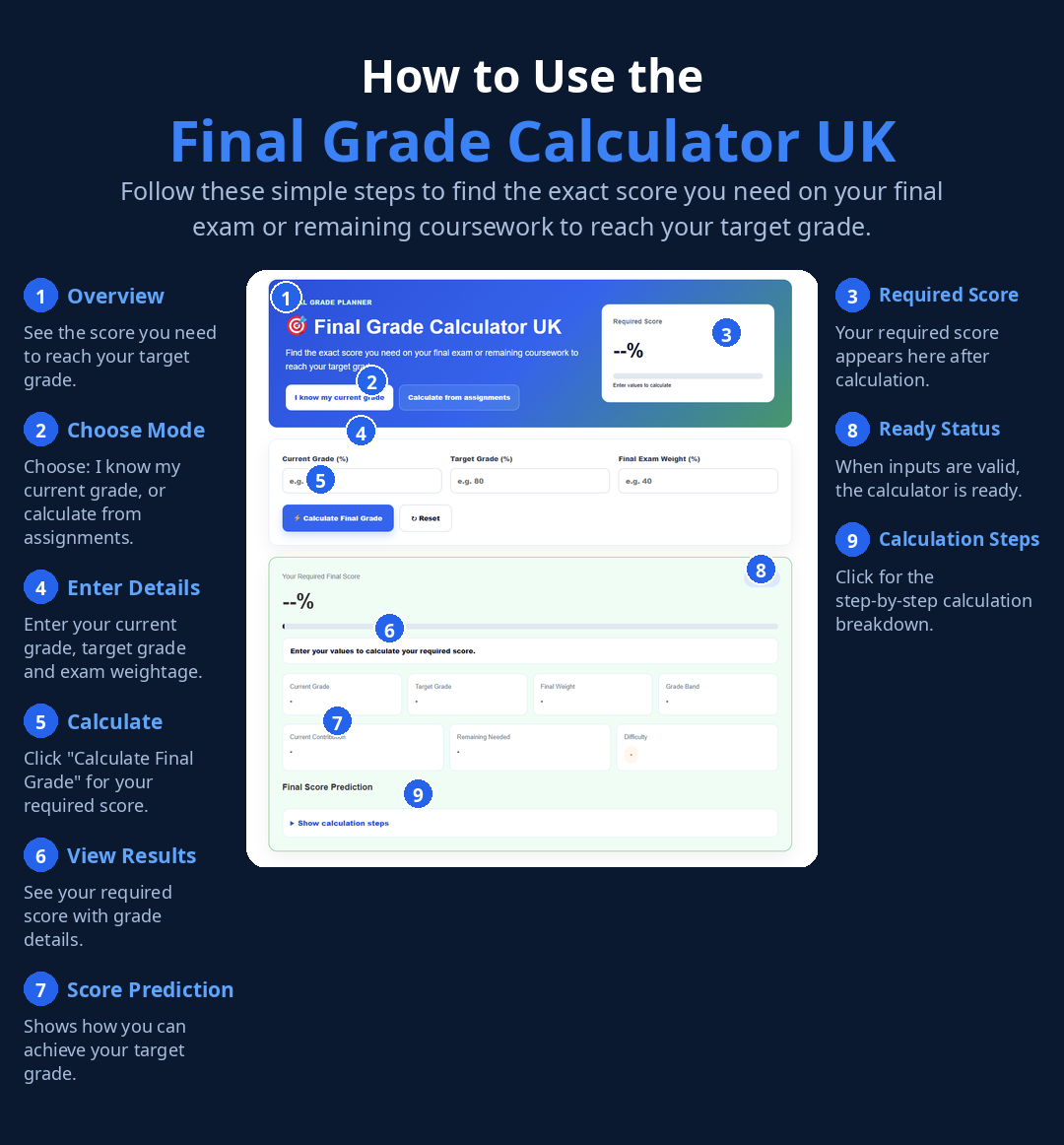
Click Here: Final Grade Calculator UK
The short answer: where your classification matters
Not every career treats your degree class the same way. Before the detail, here is the map:
| Where you are headed | Does classification matter? | Why |
|---|---|---|
| Big graduate schemes (finance, consulting, civil service) | Yes — for 44% of them | A 2:1 filter still screens you out at just under half of major employers (ISE survey) |
| Taught masters applications | Yes, usually | Most courses ask for a 2:1; 2:2s considered with experience and a strong case |
| Funded PhDs and doctorates | Yes | Studentships and doctoral training partnerships typically require 2:1 or above |
| Teacher training bursaries | Partly | Bursaries for shortage subjects are tiered by degree class |
| Jobs 2–3 years after graduating | Barely | Recruiters buy your track record, not your transcript |
| Lifetime salary | Modestly | A real but shrinking premium — and your subject matters more |
| Startups, SMEs, portfolio careers | Rarely | Skills tests and work samples beat parchment |
What graduate employers actually require: the numbers
The single best dataset on this question is the Institute of Student Employers (ISE) annual Student Recruitment Survey, which polls the UK’s largest graduate recruiters. Its most recent findings are striking. Only 44% of major employers now set a 2:1 as their minimum degree requirement — the lowest figure in the survey’s history, down from 76% when records began in 2013–14. For the first time ever, fewer than one in ten employers set minimum UCAS A-level grade requirements either, down from 40% a decade ago.
That is a genuine cultural shift, and it has names attached. Back in 2015, EY (Ernst & Young) scrapped its academic entry requirements entirely after finding “no evidence” that success at university correlated with achievement in professional qualifications. PwC later removed its 2:1 requirement too, arguing that talent is defined by more than grades. The ISE’s chief executive has said he would not be surprised if the 2:1 proportion falls further, as employers replace grade filters with skills testing done up front.
There is a wrinkle worth knowing. The share of employers setting no minimum entry requirement at all fell from 26% to 18% in the latest survey — a partial reversal. And competition has intensified brutally: the average large employer now receives 86 applications per vacancy, up 23% year on year, with a median graduate starting salary of £32,000. So the filter is weaker, but the funnel is narrower. A 2:2 no longer locks you out of the graduate market — it just means you are competing harder in the half of it that never filtered on grades in the first place. As targetjobs puts it: you can be accepted onto a graduate scheme with a 2:2.
The salary evidence: what a 2:1 is actually worth
Start with the baseline. The Higher Education Statistics Agency’s Graduate Outcomes survey — which contacts every UK graduate, not just the employed ones — found 87% of graduates in work or further study, with an overall median salary of £30,000 in full-time paid employment fifteen months after graduation, up from £28,500 the previous year.
Now the classification split. Analysis of graduate earnings data (published via Warwick’s economics department) found that the earnings return to a 2:1 relative to a 2:2 or below has increased by up to 8 percentage points — meaning the salary gap between a 2:1 and a 2:2 has actually widened, even as fewer employers formally require the 2:1. The researchers’ suggested explanation is exactly what you would guess: the rising tendency of employers to use the upper-second as a minimum has concentrated better-paid graduate roles among 2:1 holders.
The same analysis found tentative evidence that the premium for a First over a 2:1 has fallen by up to 3 percentage points — plausibly because firsts have become far more common, rising from 8% of graduates in 1996–97 to 28% in 2017–18. When nearly a third of graduates hold a First, it stops being the differentiator it was. And the biggest caveat of all comes from the Institute for Fiscal Studies: your subject matters more than your class. The IFS calculated that one in five undergraduates would have been better off financially never going to university at all, while the average net lifetime earnings premium of a degree is around 20% — a figure dominated by what you studied, not the letters after the percentage.

Where your classification is a genuine hard gate
Nuance aside, there are doors where the classification number is checked mechanically, and no amount of charm gets you past it:
Taught masters degrees
Most UK masters courses ask for a 2:1 at undergraduate level as standard (Prospects). But the door is not bolted: applicants with a 2:2, a Third, or sometimes no undergraduate degree at all can be considered if they bring a strong personal statement, relevant professional work experience, and a convincing explanation of their grades and readiness for postgraduate study. The practical advice from admissions tutors is consistent — contact the department directly before assuming you are ruled out. One funding sting to know: a lower class knocks you out of merit-based scholarships and bursaries, but postgraduate loans and needs-based funding are not awarded on academic merit, so you remain eligible. If postgraduate study is your plan, our guide to Masters grading: Merit vs Distinction explains the targets you will be chasing once you are in.
Funded doctorates and professional doctorates
Funded PhD studentships, doctoral training partnerships and competitive professional doctorates (clinical psychology is the classic example) routinely specify a 2:1 or above as a minimum, and here the filter is far stickier than in the graduate jobs market. If academia or a regulated doctoral profession is the goal, classification is one of the few places where it functions almost like an entry tariff.
Teacher training bursaries
For shortage subjects, Department for Education teacher-training bursaries have historically been tiered by degree class — a First attracting more than a 2:1, which attracts more than a 2:2. The tiers change year to year, so check the current DfE figures, but the principle holds: in teaching, your class has a direct cash value.
The strictest graduate schemes
Finance, magic-circle law and strategy consulting have historically run the tightest 2:1 filters — though even here the direction of travel is one-way, as the EY and PwC examples show. If your dream employer is in this group, check its current policy rather than the folklore: many firms that filtered at 2:1 five years ago have quietly dropped it.
Where nobody will ever ask again
Now the other side. Once you have two to three years of work behind you, your classification effectively retires. Recruiters hiring experienced staff buy evidence — projects shipped, revenue influenced, teams led — and a line on a CV from three years ago barely registers. The same is true from day one in large parts of the economy: startups and SMEs overwhelmingly hire on skills tests, work samples and interviews; creative and portfolio industries judge the portfolio; and in tech, the ability to pass a technical assessment dwarfs the degree label.
There is also a dirty secret about verification. Research for HEDD, the UK’s degree-verification service, found that only around 20% of employers carry out proper checks on applicants’ qualifications — most take the CV at face value. That is emphatically not an invitation to embellish (see below), but it tells you how much weight most hiring managers actually place on the classification line once you are in the room.
Can employers actually check your classification? Yes — here is how
They can, and in regulated sectors they do. HEDD (Higher Education Degree Datacheck), run by Prospects, lets employers verify a candidate’s degree — including its classification — directly with the awarding university. More than 116,000 checks have been run since the service launched, and 220 bogus institutions have been officially identified. Sectors where public safety is involved, such as healthcare and finance, check as a matter of course.
The reason the system exists is that lying is endemic. The Risk Advisory Group found 38% of CVs from 25–32 year-olds had been falsified, and a poll of recruiters found education or qualifications were the second-most lied-about area (41%), behind only work experience. The consequences are real: in 2010 Rhiannon McKay became the first woman convicted of CV fraud in the UK, sentenced to six months’ imprisonment for falsified A-levels and a forged reference. Employers who discover a lie after hiring can dismiss for gross misconduct and, in serious cases, pursue fraud charges. Never inflate your classification. A 2:2 you can explain will always beat a 2:1 you cannot prove — and your university transcript will contradict you anyway.
Worked example 1: the graduate-scheme funnel
Take two finalists, Amara and James. Amara is on track for a 2:1; James is heading for a 2:2. Both fire off applications to 30 major graduate schemes.
Apply the ISE figure: 44% of major employers filter at 2:1. That means roughly 13 of those 30 schemes screen James out automatically on academic grounds, while all 30 remain open to Amara. But 17 schemes — more than half — never filtered on classification at all, and both graduates compete in those on equal terms. Now layer in the competition: at 86 applications per vacancy, every scheme is a lottery ticket regardless of class. James’s realistic play is to concentrate his effort on the 17 open schemes and on smaller employers, where the filter barely exists, rather than spending his energy on 13 doors that were locked before he knocked. The maths says a 2:2 shrinks the top of the funnel by about two-fifths at the biggest employers — it does not close the market.
Worked example 2: the lifetime salary gap, illustrated
Priya graduates with a 2:1; her coursemate Tom graduates with a 2:2. Both land full-time graduate work at the median Graduate Outcomes salary of £30,000.
The Warwick analysis found the earnings return to a 2:1 over a 2:2-or-below has grown by up to 8 percentage points. As a rough illustration, 8% of £30,000 is about £2,400 a year. Sustained over a 40-year career, that compounds to roughly £96,000 in today’s money — before any career-progression effects, which tend to widen the gap further.
Handle that number with care, because it is illustrative, not a promise. It captures correlation, not causation: 2:1 holders disproportionately studied higher-earning subjects, attended more selective universities, and had stronger prior attainment — all of which independently raise salaries. The IFS finding is the corrective lens: subject choice moves the needle more than classification does. A 2:2 in computer science will, on average, out-earn a First in a low-earning subject. But the direction of the premium is real, and it has been getting stronger, not weaker.
Your classification is lower than you wanted: the 7-step plan
If results day (or your final-year projections) delivered a 2:2 or a Third, here is the damage-limitation sequence, in order:
- Check the borderline rules first. If you finished at 59.4% or 69.4%, your university’s discretionary uplift or rounding policy may still move you up a class. Read our guide to borderline grades and how universities handle them before accepting the lower label.
- Do the chase-maths. If you are still studying, plug your completed module marks into the Final Grade Calculator and see exactly what your remaining modules must average. Our 2:2 to 2:1 recovery guide shows how final-year weighting gives you more leverage than you think — a 62% final-year average can rescue a 2:1 from a mid-50s second year.
- Target the 56%. Since 44% of major employers filter at 2:1, that leaves most of the market open. Prioritise employers with no academic filter, SMEs, startups and public-sector schemes — and use the saved effort to write better applications for fewer roles.
- Consider a masters as a reset. A 2:2 plus relevant work experience can still get you onto many taught masters courses, and a Merit or Distinction at postgraduate level effectively overwrites the undergraduate story on your CV.
- Buy experience, not certificates. Internships, placements, freelance work and demonstrable projects are what recruiters actually discuss in interviews. Six months of relevant experience outweighs the difference between a 2:1 and a 2:2 in almost every hiring conversation after graduation.
- Prepare for verification. Keep your certificate and transcript accessible, and know that HEDD exists. Being relaxed and ready when an employer asks to verify is a small but real signal of professionalism.
- Never lie about it. Not on the CV, not in the interview, not on LinkedIn. A 2:2 you can explain beats a 2:1 you cannot prove — and discovery means instant dismissal or worse.
The verdict: should you chase the higher class?
Here is the decision framework. When you are asking yourself “does your degree classification matter?”, chase the higher classification if you are within one or two percentage points of the boundary (borderline rules and rounding may do half the work), if your target employers still run 2:1 filters, or if you want a competitive masters, funded doctorate or bursary-tiered teaching route. In those cases the return on a few extra marks is genuinely large.
Do not sacrifice your health, your other modules or your final-year experience to drag a mid-band 2:2 to a low 2:1 if you are heading for SMEs, startups, portfolio careers or further study via the experience route — the data says the payoff there is marginal, and the same hours invested in an internship or a project will buy you more. And if you are chasing a First specifically for the prestige? Know that the First-over-2:1 salary premium has been shrinking as firsts have become more common. A comfortable 2:1 with a year of experience behind it beats a stressed, joyless First almost every time.
One last perspective from the data: the graduate premium itself is under pressure — one in five graduates would, in pure financial terms, have been better off not going to university. The students who beat those odds are not the ones with the shiniest classification. They are the ones who chose their subject deliberately, built experience while studying, and understood which doors actually check the label. Now you do too.
Do employers check your degree classification?
They can. HEDD (Higher Education Degree Datacheck), run by Prospects, lets employers verify your degree and classification directly with your university, and regulated sectors such as healthcare and finance check routinely. However, HEDD research suggests only around 20% of employers carry out proper qualification checks — most take your CV at face value. Never lie about your classification: discovery can mean instant dismissal or prosecution for fraud.
Can I get a graduate job with a 2:2?
Yes. According to the Institute of Student Employers, fewer than half (44%) of major graduate employers now require a 2:1 — a record low, down from 76% a decade ago. More than half of large employers, plus the vast majority of SMEs and startups, do not filter on classification at all. Target those employers and compete on skills, experience and application quality.
Is a 2:1 actually worth more money than a 2:2?
The data says yes, modestly — and the gap has widened. Analysis of graduate earnings found the earnings return to a 2:1 over a 2:2 or below has increased by up to 8 percentage points, even as formal 2:1 requirements fell. But correlation is not causation: subject choice, university selectivity and prior attainment all contribute, and the IFS finds your subject matters more than your class.
Does a Third-class degree ruin your career?
No, but it makes the start harder. Some graduate schemes and most taught masters courses will be difficult to access directly, and merit-based funding is usually off the table. The proven routes are work experience, a masters later via the 2:2/third-plus-experience route, professional qualifications, and targeting employers that hire on skills rather than grades. After two to three years of work, almost nobody asks about your classification.
Do employers care about a First vs a 2:1?
Less than they used to. Research suggests the salary premium of a First over a 2:1 has fallen by up to 3 percentage points, likely because firsts have become much more common — rising from 8% of graduates in 1996–97 to 28% in 2017–18. A handful of elite schemes still prefer Firsts, but for most employers a strong 2:1 with experience beats a bare First.
Can I do a Masters with a 2:2?
Usually, yes. Most UK masters courses ask for a 2:1, but universities routinely consider 2:2 holders — and sometimes Thirds — with a strong personal statement, relevant professional work experience and a convincing explanation of their grades. Contact the admissions department directly rather than assuming you are ruled out. Note that merit-based scholarships will generally require higher grades, though postgraduate loans and needs-based funding are unaffected.
How long does your degree classification matter on your CV?
For most careers, about two to three years. Once you have a track record of work — projects delivered, promotions earned, skills demonstrated — recruiters hire on evidence, not on a classification from years ago. The exceptions are academia, funded doctorates and a handful of professions where the class functions as an entry tariff.
Will a 2:2 stop me getting a teaching bursary?
It reduces it rather than stopping it. Department for Education bursaries for shortage subjects have historically been tiered by degree class, with higher payments for Firsts and 2:1s. Check the current year’s DfE bursary figures for your subject, as the tiers and amounts change annually.
Conclusion
Your degree classification is neither the golden ticket universities imply nor the irrelevance your most relaxed coursemates claim. It is a sorting mechanism whose power is fading in the graduate jobs market — 44% of major employers still filter at 2:1, but that is the lowest share on record and falling — while its quiet influence on lifetime earnings has, paradoxically, grown. The students who navigate this well are not the ones who obsess over every mark; they are the ones who know exactly which doors check the label and walk through the ones that do not.
So use the framework, not the fear. If you are close to a boundary or aiming at a filtered scheme, a funded doctorate or a bursary-tiered profession, fight for every mark — the return is real. Otherwise, invest the same hours in experience, projects and applications to employers who hire on merit rather than parchment. Three years after graduation, nobody will ask whether you got a 2:1 or a 2:2. They will ask what you have done since — so make sure you have an answer.

![Read more about the article Can You Do a Masters with a 2:2? UK Entry Requirements Explained [2026]](https://gradeforuni.com/wp-content/uploads/2026/10/featured-masters-2-2-uk-300x192.png)
![Read more about the article Can You Ask for a Remark? How Re-marking and Mark Reviews Work at UK Universities [2026]](https://gradeforuni.com/wp-content/uploads/2026/10/featured-ask-for-a-remark-300x192.png)