

Many Credits Count Picture this: you’ve just wrapped up your second year, your marks are in, and you’re feeling good about where you stand. Many Credits Count Then a friend mentions that half of what you studied in first year probably doesn’t count toward your final grade at all — and now you’re second-guessing everything Many Credits Count.
This mix-up trips up a huge number of UK students. Many Credits Count The question of how many credits count toward your final degree classification isn’t always obvious, and the answer changes depending on your university, your course structure, and which year you’re in. Many Credits Count Once you understand the underlying pattern, though, it becomes far easier to track your real academic position Many Credits Count.
Knowing exactly which credits count — and which ones don’t — isn’t just trivia. Many Credits Count It shapes how you plan your workload, how accurately you can predict your final result, and how much weight you should give to any single module mark Many Credits Count.
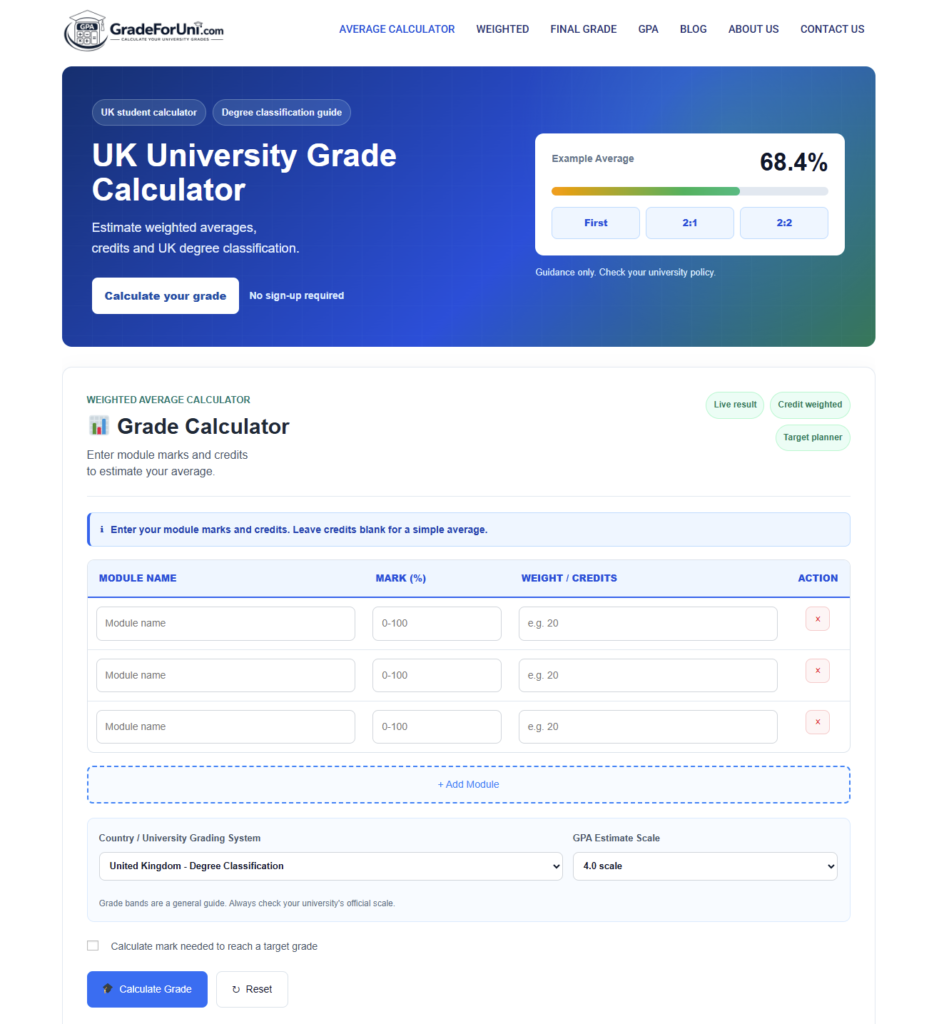
Click Here: UK University Grade Calculator
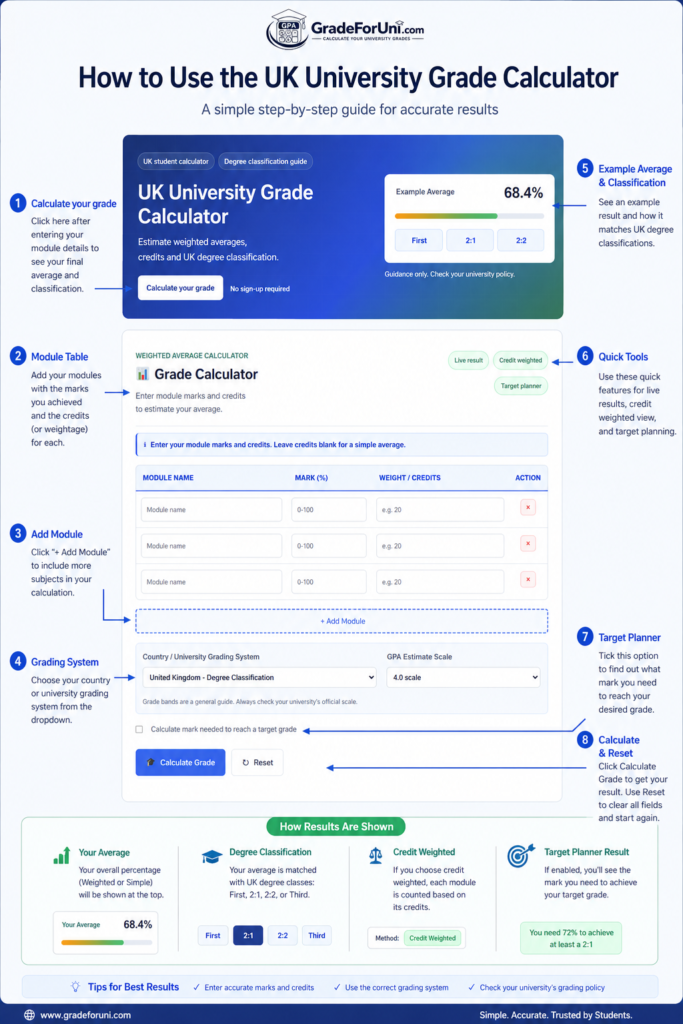
How to Use the UK University Grade Calculator
Quick Answer
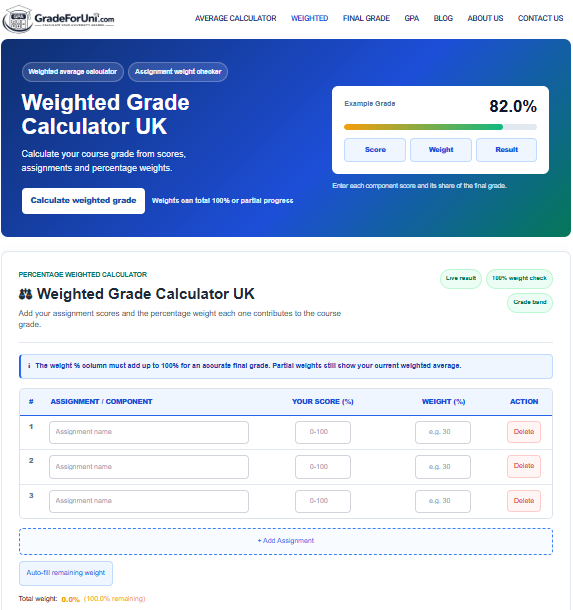
Out of the 360 total credits in a standard three-year UK Honours degree, usually only 240 credits — those from Year 2 and Year 3 — count toward your final classification. Year 1’s 120 credits typically need to be passed, but they don’t factor into your overall average. Many Credits Count How many credits count depends on your specific university’s regulations, but the Year 2 and Year 3 model is the most widely used across UK institutions Many Credits Count. You can check your own figures using our Weighted Average Calculator Many Credits Count.
What This Guide Covers
This guide walks through exactly how many credits count toward your final degree classification, and why Many Credits Count. We’ll start with the basic structure UK universities follow, clear up the terminology that trips students up, and look at a worked example showing why assuming every credit counts can lead you to the wrong conclusion about your own progress Many Credits Count.
From there, we’ll get into the mechanics — the exact formula used to combine your counted credits with year weighting, plus how placement years and integrated Masters courses change the numbers. Many Credits Count Finally, we’ll cover the finer details that catch students out even after they’ve learned the formula, including borderline classification rules and how resits interact with your counted credits Many Credits Count.
The Basic Credit Structure of a UK Degree
Every module on a UK undergraduate course carries a credit value, usually 10, 15, 20, 30 or 40 credits, depending on its size and workload. Many Credits Count Add them all up across a standard three-year Honours degree and you get 360 credits total, spread across three years of 120 credits each Many Credits Count.
Here’s the part that catches people out: earning credits and having those credits count toward your classification are two separate things. Many Credits Count You need all 360 credits to graduate. Many Credits Count But when your university calculates the percentage that determines whether you get a First, a 2:1, a 2:2 or a Third, it usually only looks at a portion of those credits Many Credits Count.
The general pattern followed by most UK universities looks like this:
| Year | Credits | Counts Toward Classification? |
| Year 1 | 120 | No — pass requirement only |
| Year 2 | 120 | Yes — usually 20–33% of final result |
| Year 3 | 120 | Yes — usually 67–80% of final result |
So while your degree is built on 360 credits, it’s often just 240 of them that shape your actual classification. Many Credits Count This single fact explains why students frequently notice their “official” average changing significantly the moment they move past first year — the credits that no longer count simply drop out of the picture Many Credits Count.
Key Terms You Need to Understand First
Before working through examples, it’s worth being clear on a few terms that get used loosely, but which mean specific things on your transcript Many Credits Count.
| Term | What It Means |
| Credit value | The number of credits a module is worth, based on its workload and depth |
| Counted credits | Credits from modules that are actually used in your classification calculation |
| Non-counted credits | Credits you need to pass, but which don’t influence your final average |
| Year weighting | The percentage each year contributes to your overall classification |
| Weighted average | An average calculated by multiplying marks by credit values, rather than treating every module equally |
Confusing “non-counted” with “unimportant” is one of the most common mistakes here. Many Credits Count A module can sit entirely outside your classification calculation and still be something you absolutely have to pass to progress Many Credits Count.
Visit Now: Mauricette Calculette
Why It Matters How Many Credits Count
It’s tempting to assume every mark you earn plays an equal role in your final result. Many Credits Count In practice, understanding how many credits count changes the way you think about your degree in a few concrete ways:
- It tells you where to focus your energy. Many Credits Count If Year 1 doesn’t count, pouring extra effort into perfecting a first-year assignment at the expense of Year 2 revision isn’t the smartest trade-off Many Credits Count.
- It keeps your self-calculated average accurate. Including credits that don’t actually count gives you a number that doesn’t match what your university eventually confirms Many Credits Count.
- It explains why your average can shift dramatically between years. A weaker first year, or a stronger one, can appear to “vanish” once it drops out of the calculation entirely.
- It helps you plan realistically. Since final year usually carries the heaviest weighting, knowing this early lets you treat it with the seriousness it deserves rather than being surprised later.
Common Misconceptions About Counting Credits
A handful of misunderstandings come up again and again when students try to work out how many credits actually count toward their result.
“Every credit I earn adds to my final classification”
Not the case. You need every credit to progress through your course and graduate, but that’s a separate requirement from which credits are used to calculate your classification percentage.
“If a module isn’t counted, my mark in it doesn’t matter”
It still matters for progression. Most universities require you to pass non-counted modules, and some set a minimum average you need to hit even in years that don’t contribute to your final classification.
“Every UK university counts credits the same way”
They don’t. The 120-credits-per-year, 360-total structure is the most common, but it’s not universal — integrated Masters courses, for example, often run to 480 credits across four years, with different rules for how the final year counts.
“A placement year counts the same as an academic year”
Usually not. Most placement years are graded pass/fail and sit outside the credit-weighted classification calculation entirely, even though they show up on your transcript and count for a great deal in terms of experience.
Worked Example: Two Students, Same Marks, Same Result
Here’s a simple example that shows exactly why understanding how many credits count actually matters. Two students, Leah and Marcus, finish their degrees with the following year averages:
| Student | Year 1 Average | Year 2 Average | Year 3 Average |
| Leah | 82% | 63% | 67% |
| Marcus | 51% | 63% | 67% |
If every year counted equally, Leah would appear to have a clear advantage thanks to her strong first-year performance. But under the standard model — where Year 1 doesn’t count — both students’ final classifications depend entirely on their identical Year 2 and Year 3 results.
Using a common 33:67 split between Year 2 and Year 3:
Final Average = (63 × 0.33) + (67 × 0.67) = 20.79 + 44.89 = 65.7%
Both students end up in the Upper Second Class (2:1) band, regardless of how different their first-year marks were. This is exactly the kind of outcome that surprises students who haven’t checked how many of their credits are actually counted — a strong first year feels significant at the time, but it may have no bearing on the final number at all.
Step-by-Step: How Universities Combine Counted Credits
Once you know which credits count, the next step is understanding exactly how those credits get turned into a single classification percentage. This happens in two distinct stages — first within each year, then across the years that count.
Step 1: Work out the weighted average for each counted year. Within Year 2, multiply each module’s mark by its credit value, add those figures together, then divide by the total credits for that year. Repeat the same process for Year 3. At this stage, you’ll have two separate numbers — a Year 2 average and a Year 3 average — not yet combined.
Step 2: Find your university’s year weighting split. Every university publishes the exact percentage split between counted years in its academic regulations or course handbook. Splits like 33:67 or 40:60 (Year 2 to Year 3) are common, but you shouldn’t assume yours matches without checking.
Step 3: Multiply each year’s average by its weighting. Take your Year 2 average and multiply it by its weighting percentage. Do the same for Year 3.
Step 4: Add the two figures together. The result is your final classification average.
The formula:
Final Classification Average = (Year 2 Average × Year 2 Weight) + (Year 3 Average × Year 3 Weight)
This two-stage process is where a lot of students go wrong. It’s common to correctly calculate a credit-weighted average within each year, then simply average the two years together at 50:50 — which almost never matches how your university actually calculates your result.
Worked Example: A Full Two-Stage Calculation
Here’s a complete walkthrough using a Psychology student’s results.
Year 2 modules:
| Module | Credits | Mark | Weighted Contribution |
| Cognitive Psychology | 20 | 68% | 1,360 |
| Research Methods | 20 | 61% | 1,220 |
| Developmental Psychology | 20 | 59% | 1,180 |
Year 2 Average = (1,360 + 1,220 + 1,180) ÷ 60 = 62.7%
Year 3 modules:
| Module | Credits | Mark | Weighted Contribution |
| Clinical Psychology | 20 | 71% | 1,420 |
| Neuroscience | 20 | 65% | 1,300 |
| Dissertation | 40 | 74% | 2,960 |
Year 3 Average = (1,420 + 1,300 + 2,960) ÷ 80 = 71.0%
Combining with a 33:67 split:
Final Average = (62.7 × 0.33) + (71.0 × 0.67) = 20.69 + 47.57 = 68.3%
This student lands just inside the Upper Second Class (2:1) band, close enough to a First that a strong dissertation mark made a real difference to the final outcome.
Real-Life Scenario: A Sandwich Degree With a Placement Year
Placement years sit awkwardly in the middle of a lot of degree structures, and students often aren’t sure how they factor in.
Take a Business student on a four-year sandwich course, where Year 3 is spent on an industry placement between academic Year 2 and the final academic year (officially Year 4 on the transcript). In most cases:
- The placement year is graded pass/fail only
- It contributes 0% toward the final classification percentage
- It still appears on the degree transcript, often as a named placement or “with professional experience” award
- The years that actually count are Year 2 and the final academic year — not the placement year in between
Some universities give a distinct classification title to students who complete a placement, even though the placement itself doesn’t add numerical weight. Always confirm this directly with your department rather than assuming your sandwich course works exactly like a standard three-year degree.
Real-Life Scenario: Integrated Masters Courses
Integrated Masters degrees — MEng, MSci, MPharm and similar — typically run four years instead of three, bringing the total credit count to 480 rather than 360. The final year is usually assessed at Masters level (Level 7), which changes how it’s treated in the calculation.
| Year | Level | Counts Toward Final Award? |
| Year 1 | Level 4 | No |
| Year 2 | Level 5 | Yes |
| Year 3 | Level 6 | Yes |
| Year 4 | Level 7 (Masters) | Yes — often calculated separately |
Because the final year sits at a different academic level, some universities keep it out of the standard percentage-based classification scale entirely, instead reporting it alongside the overall result as a separate Masters-level outcome. If you’re on one of these courses, check your handbook rather than assuming the standard First/2:1/2:2/Third bands apply cleanly across all four years.
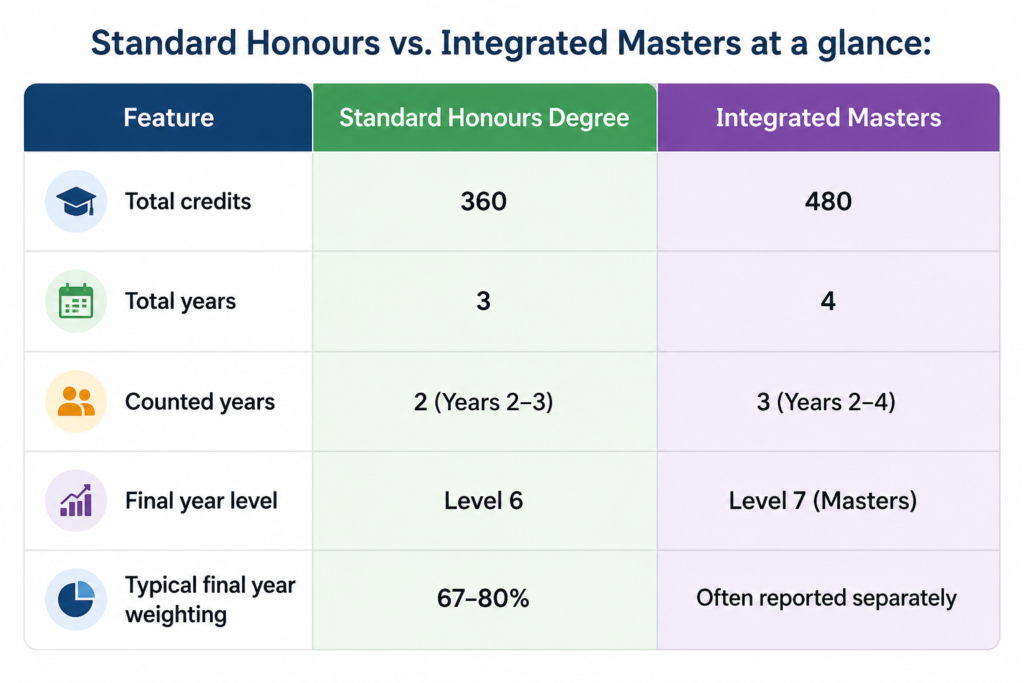
Standard Honours vs. Integrated Masters at a glance:
| Feature | Standard Honours Degree | Integrated Masters |
| Total credits | 360 | 480 |
| Total years | 3 | 4 |
| Counted years | 2 (Years 2–3) | 3 (Years 2–4) |
| Final year level | Level 6 | Level 7 (Masters) |
| Typical final year weighting | 67–80% | Often reported separately |
Common Mistakes to Avoid
A handful of errors show up repeatedly when students try to calculate this themselves.
- Including Year 1 in the final calculation. This is the single most common mistake, and it skews the result in either direction depending on how strong or weak Year 1 was.
- Averaging the two counted years at 50:50. Unless your university explicitly uses an even split, this produces a different result from the actual weighted formula.
- Calculating year weighting before the module-level weighted average. The correct order is module-level first, year-level second — reversing it produces a meaningless number.
- Assuming every placement year is worth 0%. It’s the most common approach, but not a universal rule, so confirm it for your specific course.
- Treating an integrated Masters year the same as a standard final year. The scoring scale is often different, so a direct comparison can be misleading.
- Rounding too early. Keep full decimal precision until your very last calculation to avoid small errors compounding.
Best Practices and Expert Tips
- Track each year separately in your own records, rather than lumping every module together across your whole degree.
- Confirm your exact year weighting split with your course handbook — don’t rely on the commonly cited 33:67 or 40:60 figures as a default.
- Update your calculation after every result, rather than waiting until the end of the year to work out where you stand.
- If your course includes a placement or Masters year, ask your department directly how it’s factored in — this detail varies enough between institutions that a general guide can only describe common patterns.
- Compare your self-calculated average against your student portal whenever it’s available, since many universities now display a running weighted average automatically.
Advanced Note: Credit-Pooling as an Alternative Method
Not every university calculates year weighting the way described above. Some use a credit-pooling method instead — combining every counted module from every counted year into one large pool, then applying a multiplier to credits from the later year rather than calculating separate yearly averages first.
For example, instead of working out a Year 2 average and a Year 3 average separately, a university using this method might treat every Year 3 credit as equivalent to two Year 2 credits, then run one single weighted average across the combined pool.
The final number often ends up close to what the two-stage method produces, but the underlying mechanics are different enough that it’s worth checking which approach your specific institution uses, especially if you’re trying to match your own number exactly to your transcript.
Borderline Classifications: Where Counted Credits Matter Most
When your final average lands close to a classification boundary — 69.6%, 59.8%, or similar — most universities apply a borderline review before confirming your result. This is exactly where understanding how many credits count works in your favour.
Borderline policies typically consider:
- What proportion of your counted credits sit above the next classification boundary
- Your trajectory across the years that count, particularly whether your final year showed improvement over Year 2
- Whether the gap to the boundary falls within your university’s defined review zone, commonly 0.5% to 2%
A student sitting at 69.7% with most of their final-year credits above 70% has a stronger borderline case than a student at the same percentage whose marks were spread more evenly across the boundary. The number alone doesn’t tell the full story — the distribution of your counted credits does.
Read more: How UK Universities Calculate Degree Classifications – Explained Simply
Frequently Overlooked Information
A few details continue to catch students out even once they’ve got the main formula down.
- Resit credits usually still count — only the mark changes. If you resit a module in a counted year, the credits typically remain part of your classification calculation; it’s the mark itself that’s often capped at the pass boundary.
- Compensated passes keep their full credit value. A module you narrowly failed but were compensated for is usually still counted at your original mark, not excluded from the calculation.
- A small number of universities do count part of Year 1. It’s uncommon, but some institutions apply a 5–10% Year 1 weighting, so don’t assume the majority pattern applies without checking.
- Credit structures can shift between cohorts. If you’re comparing your numbers with a friend from a different intake year, their course may have been restructured since you both enrolled.
- Audited or non-assessed modules are never counted, regardless of how much work went into them.
How different credit situations affect your final average:
| Situation | Do the Credits Count? | Impact on Final Average |
| Standard Year 2 or Year 3 module | Yes | Full effect, based on credit value and year weighting |
| Year 1 module | Usually no | No effect — must be passed, not calculated |
| Placement year | Usually no | No effect — pass/fail requirement only |
| Resat module (capped) | Yes | Counted at the capped mark, not the actual resit score |
| Compensated pass | Yes | Counted at the original mark achieved |
| Non-assessed or audited module | No | No effect under any circumstances |
Using Counted Credits to Set a Realistic Final-Year Target
Once you know exactly how many credits count, you can use that figure to reverse-engineer the mark you need in your final year, rather than guessing at your overall trajectory.
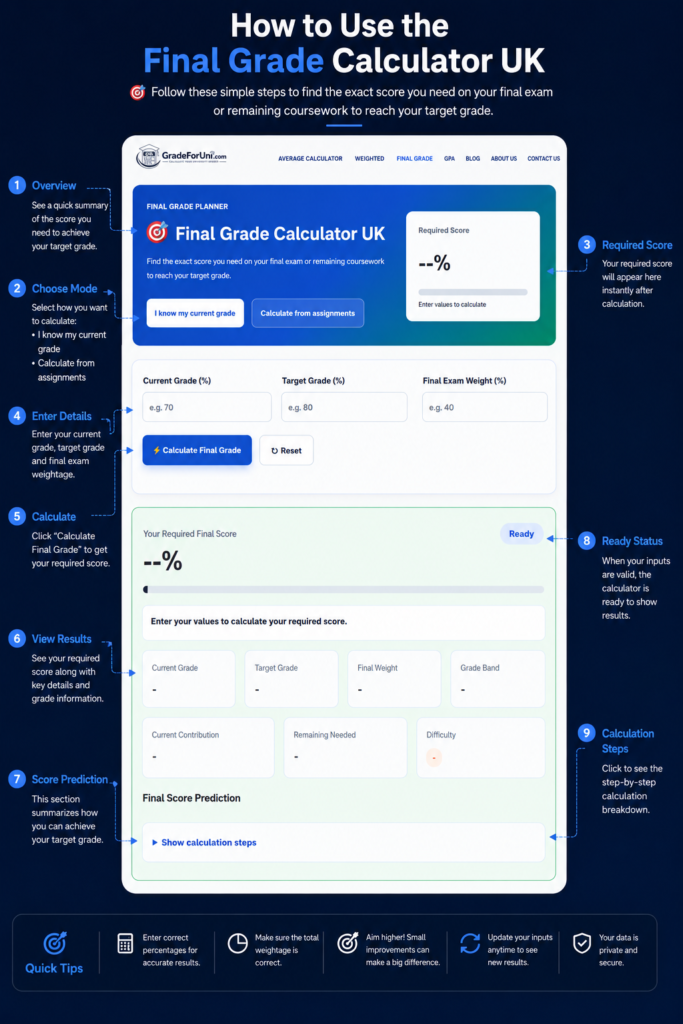
Take your completed Year 2 average, apply your university’s year-weighting split, and solve for the Year 3 average needed to hit your target classification. This is the same logic behind our Final Grade Calculator, which handles this calculation automatically.
For example, a student with a 58% Year 2 average, under a 33:67 split, aiming for a 2:1 (60% overall):
Required Year 3 Average = [(Target × 100) − (Year 2 Average × 33)] ÷ 67
= [(60 × 100) − (58 × 33)] ÷ 67 = [6,000 − 1,914] ÷ 67 = 61.0%
This student needs a 61% average in Year 3 to reach a 2:1 overall — a specific, actionable number that’s only possible to calculate once you know exactly how many credits count toward the final result.
Key Takeaways
- Out of a typical 360-credit UK degree, usually only 240 credits — Year 2 and Year 3 combined — count toward your final classification.
- Year 1 and placement years generally need to be passed but don’t factor into your final average, though this varies by university.
- Integrated Masters courses add a fourth year at Masters level, often reported separately rather than blended into the standard percentage scale.
- Resit and compensated pass credits usually still count in full; it’s typically the mark that’s adjusted, not the credit value.
- Borderline reviews often look at how your counted credits are distributed, not just your headline percentage.
- Knowing how many credits count lets you calculate a specific, realistic target for your final year instead of relying on guesswork.
Conclusion
Understanding how many credits count toward your final degree classification changes how you approach your entire degree, not just your final year. Rather than assuming every mark carries equal weight, knowing exactly which credits feed into your classification lets you focus your effort where it genuinely matters, keep your self-calculated average accurate, and set realistic targets as you move through each year.
Whether you’re trying to work out whether your placement year affects your result, how an integrated Masters year is scored, or simply why your first-year marks seem to have disappeared from the calculation, the principle stays the same: not every credit counts equally, and knowing how many credits count toward your final degree classification is the first real step to understanding where you actually stand.
FAQ’s
How many credits count toward my final degree classification?
For most UK undergraduate degrees, 240 out of 360 total credits count — specifically, those from Year 2 and Year 3. Year 1’s 120 credits usually need to be passed but don’t contribute to the final classification percentage.
Does Year 1 ever count toward my final classification?
At most universities, no. Year 1 is generally a progression requirement rather than a contributing year. A minority of institutions apply a small Year 1 weighting, often 5–10%, so check your own course handbook to confirm.
Do placement year credits count toward my degree classification?
Usually not. Placement years are typically assessed pass/fail and don’t contribute to the classification percentage, even though they appear on your transcript and add real value to your experience.
How many credits count in an integrated Masters degree?
Integrated Masters courses typically run to 480 total credits across four years, with the final Masters-level year (Level 7) often calculated and reported separately from the standard undergraduate percentage scale.
Do resit credits still count toward my final average?
Yes, in most cases. The credits from a resat module usually remain part of your classification calculation, but the mark itself is often capped at the pass boundary rather than reflecting your full resit score.
What happens to compensated pass credits?
They’re typically still counted in full, usually at your original mark, provided your university’s compensation rules apply to that specific module and situation.
What’s a typical split between Year 2 and Year 3 in the final calculation?
A 33:67 split is common, though many universities use 40:60 instead. There’s no single standard figure, so always confirm the exact ratio in your own academic regulations.
Do non-assessed or audited modules count toward classification?
No. These modules never contribute credits to your final classification, regardless of the coursework or attendance involved.
How can I find out exactly how many credits count for my course?
Check your course handbook or academic regulations, which list which years and modules contribute to your final classification. Your student portal may also show this information directly.
Can I estimate my final classification before finishing my degree?
Yes. Using your completed Year 2 average and your university’s year-weighting split, you can calculate the average you’ll need in Year 3 to reach a specific classification, similar to the planning approach used in our Weighted Average Calculator.