
UK Student Visa Maintenance Funds Rise 30 Nov 2026: £14,130 for London — What International Students Must Show [2026]
From 30 November 2026, the uk student visa maintenance funds thresholds rise for every applicant applying on or after that date. The new rates were set out in the Home Office Statement of Changes to the Immigration Rules published 3 September 2026: living costs of £1,570 a month in London (up from £1,529) and £1,203 a month outside London (up from £1,171), each capped at nine months. That takes the maximum maintenance figure an applicant must show to £14,130 for London and £10,827 for the rest of the UK — before outstanding tuition is added on top.
The change is small in percentage terms — about 2.7% — but it lands at the worst possible moment for many applicants. Maintenance money sits on top of first-year tuition on the Confirmation of Acceptance for Studies (CAS), and the whole total must sit untouched in a qualifying account for 28 consecutive days before the application. Anyone applying for the January 2027 intake from December onwards needs the new, higher totals in place from early November — and getting the arithmetic wrong by even a small amount can mean a refusal under the financial rules.
This guide lays out exactly what changes, the trigger rule that decides which figures apply to you (it is the application date, not the CAS date), how the maintenance total is calculated, the 28-day holding rule and evidence rules, the visa fee and Immigration Health Surcharge that sit on top, three worked examples with full arithmetic, the accommodation offset, and the January 2027 intake timeline. Figures here are the new rates that take effect for applications on or after 30 November 2026; the official gov.uk pages still show the old figures until the change takes effect.
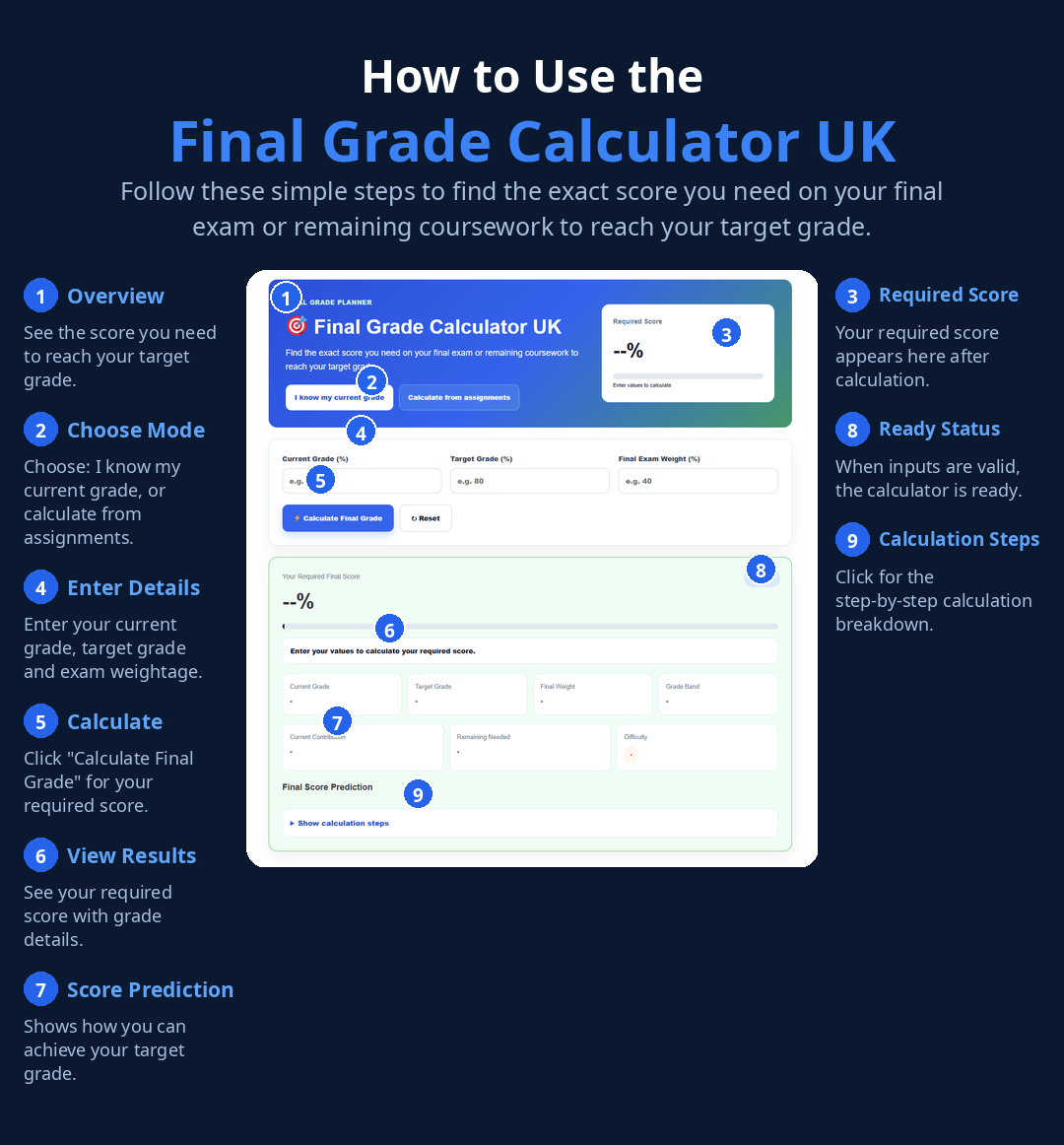
Click Here: Final Grade Calculator UK
What exactly changes on 30 November
The Statement of Changes amends the monthly maintenance rates in the Immigration Rules for the Student route. The old and new figures, confirmed across paragraph-level analysis of the Statement, are:
| Requirement | Applications before 30 Nov 2026 | Applications on/after 30 Nov 2026 | Change |
|---|---|---|---|
| London, per month | £1,529 | £1,570 | +£41/mo (+2.7%) |
| London, 9-month maximum | £13,761 | £14,130 | +£369 |
| Outside London, per month | £1,171 | £1,203 | +£32/mo (+2.7%) |
| Outside London, 9-month maximum | £10,539 | £10,827 | +£288 |
| Accommodation offset cap (paid to sponsor) | £1,529 | £1,570 | +£41 |
Two points matter immediately. First, the nine-month cap is unchanged: courses longer than nine months are assessed on nine months of living costs, and courses shorter than nine months are assessed on the actual number of months. Second, the accommodation offset cap — the amount of university-paid accommodation that can be deducted from maintenance — rises from £1,529 to £1,570 under the same changes, based on paragraph-level citations of the Statement. The old figures remain visible on the live gov.uk pages for now, because those pages update when the new rules take effect.
The trigger rule: it is your application date, not your CAS date
This is the single most misunderstood part of the change. The deciding factor is the date the visa application is made — not the date the CAS was issued, not the course start date. Applications made before 30 November 2026 are decided under the rules in force on 29 November; applications made on or after 30 November 2026 are decided under the new figures. An application submitted on 29 November uses £1,529/£1,171. An application submitted on 30 November uses £1,570/£1,203. One day, £41 a month of difference.
Getting the CAS early does not lock in the old rate. The CAS is the document your university issues once your place is confirmed and you have met its conditions, and it records your course details and fee information — but the Immigration Rules in force on the application date decide which maintenance figures UKVI applies. If your university is still finalising your CAS into November, that is worth knowing now rather than discovering at the point of application. And if financial problems threaten your enrolment before the CAS is issued, institutions can withdraw the offer entirely — our guide to whether a university can withdraw your offer explains how that side of the process works.
What the maintenance figure is made of
Maintenance is not a standalone lump sum. It is a formula: outstanding first-year tuition (the amount shown on the CAS) plus living costs at the monthly rate for the length of the course, capped at nine months. Amounts already paid to the sponsor reduce the total. The table below shows the full working:
| Component | How it is calculated | Example (new rates, London, 1-year Masters) |
|---|---|---|
| First-year tuition outstanding | Total on CAS minus anything already paid to the university | £22,000 − £4,000 paid = £18,000 |
| Living costs | Monthly rate × course months, max 9 months | £1,570 × 9 = £14,130 |
| Less: accommodation paid to sponsor | Deducted, capped at £1,570 | £0 (no accommodation paid yet) |
| Total to hold for 28 days | Tuition + living − offset | £32,130 |
“London” for immigration purposes means the City of London plus the 32 London boroughs — not the commuter belt. A university in Guildford, Reading or Luton is outside London even if its students commute into the capital; a university in any of the 32 boroughs is London even if it sits in zone 6. Check the address, not the postcode marketing. The formula itself never changes: the uk student visa maintenance funds total is always outstanding tuition plus monthly living costs — there is no separate discretionary element and no way to substitute one component for the other.
Dependants add their own maintenance on top, per person: £845 a month in London or £680 a month outside London, for each month of the visa up to nine months. These dependant figures are unchanged by this Statement of Changes — but they stack with the new student rates, so a partner joining a London student on a nine-month visa now needs £845 × 9 = £7,605 of additional evidence on top of the student’s own total.
The 28-day rule (and the 31-day evidence rule)
The money must have been held for 28 consecutive days, counted back from the closing-balance date on the most recent piece of evidence — the balance date shown on the statement, not the date you downloaded it. That is a stricter test than it sounds: the balance must not dip below the required total at any point in those 28 days, even for a single day. A balance that briefly fell short on day 14 and recovered on day 15 fails the rule, and the clock restarts.
There is a second, separate clock. Evidence must be dated no more than 31 days before the visa application date. The gov.uk guidance gives this example: applying on 1 January means showing funds held for the 28-day period ending on 1 December. Put the two rules together for a realistic January-intake application:
| Milestone | Date (example: applying 5 December 2026) | What it means |
|---|---|---|
| Money in place from | Early November 2026 | The 28-day window must END on or after 5 November at the NEW totals |
| Bank evidence dated from | On or after 4 November 2026 | Within 31 days before the 5 December application |
| Application | 5 December 2026 | New figures apply — the trigger is the application date |
| Typical decision (outside UK) | Late December 2026 | ~3 weeks standard processing; the money must stay in place |
What counts as acceptable evidence is precise. Bank statements (paper or downloads), building society passbooks, certificates of deposit and bank letters all work if they show the account holder’s name, the bank’s name and the balance. The account must allow immediate access, the funds must have been acquired legally, and the bank must keep electronic records — unregulated banks fail the test. You can use money in your own account, your parents’ money (with a letter from them confirming you may use it), your partner’s money if the partner is in the UK or applying at the same time, a government or regulated student loan (with a letter dated within six months of the application), or an official financial sponsorship. Overdrafts, cryptocurrency, stocks and shares, and pensions are not acceptable. Foreign currency is converted by UKVI at the OANDA spot rate on the application date — build in a buffer, because the rate on the day of the decision is not the rate you see today.
One exemption is worth noting: some nationalities are on the “differential evidence” list and do not need to submit evidence upfront (UKVI can still request it). India, Pakistan, Nigeria and Bangladesh are not on that list — applicants from those countries must show the evidence with the application.
The full cost picture: the visa fee and health surcharge sit on top
The maintenance figure is what UKVI checks in the bank account, but it is not the full upfront cost of the application. Two more charges are paid at the point of applying:
| Charge | Amount | Notes |
|---|---|---|
| Student visa application fee (outside UK) | £558 | Per person — each dependant pays it too; same fee for in-UK extension or switch |
| Immigration Health Surcharge (IHS) | £776/year for students and dependants | Paid separately by card at application; refunded if the visa is refused |
The £776 figure is the student rate. The £1,035-a-year figure you will see quoted online is the standard adult rate for other immigration routes — do not use it for student-visa arithmetic. Part-year charging for the surcharge follows fixed rules: six months or less on an outside-UK application means no charge; more than six months but less than a year means a full year’s charge; over a year up to eighteen months means the yearly rate plus half; over eighteen months but under two years means two full years.
Tuition completes the picture. The maintenance total already includes outstanding first-year tuition, but the deposit already paid to the university is gone from the bank account — so the cash actually leaving your hands is larger than the figure UKVI checks. The worked examples below show the full outlay honestly.
Worked example 1: London, one-year Masters
A student has a one-year Masters at a London university with annual tuition of £22,000, of which a £4,000 deposit has already been paid to the university. She applies on 5 December 2026, so the new rates apply.
Outstanding tuition = £22,000 − £4,000 = £18,000.
Maintenance = £1,570 × 9 = £14,130.
Total to hold for 28 consecutive days = £18,000 + £14,130 = £32,130.
On top of that, paid separately at application: visa fee £558, plus the IHS for a visa of roughly sixteen months (a one-year course plus the standard wrap-around period). Sixteen months falls in the “over a year up to eighteen months” band: £776 + £388 (half-year) = £1,164. Total upfront outlay ≈ £32,130 + £558 + £1,164 = £33,852.
Compare with the same application made on 29 November 2026: £18,000 + (£1,529 × 9 = £13,761) = £31,761. The December application costs £369 more in required funds — the exact size of the London increase. And this excludes any exchange-rate movement, since UKVI converts at the OANDA spot rate on the application date.
Worked example 2: outside London, one-year Masters
A student has a one-year Masters at a university outside London — say in Manchester or Birmingham — with tuition of £17,000 and £2,000 already paid. He applies on 10 December 2026.
Outstanding tuition = £17,000 − £2,000 = £15,000.
Maintenance = £1,203 × 9 = £10,827.
Total to hold for 28 consecutive days = £15,000 + £10,827 = £25,827.
Visa fee £558 and IHS £1,164 (same sixteen-month calculation) bring the total upfront outlay to ≈ £27,549. Under the old rules the required funds would have been £15,000 + £10,539 = £25,539 — the December application needs £288 more held in the account.
Notice how much of the total is tuition. Students sometimes fixate on the maintenance rates because those are what changed, but the tuition outstanding on the CAS is usually the bigger component. Confirm the exact outstanding figure with the university before arranging funds; the CAS and the university’s own figures must agree, because UKVI works from the CAS.
Worked example 3: the accommodation offset
A London applicant has already paid £1,500 toward university accommodation — paid directly to the university as the sponsor. Her maintenance figure is £14,130. The £1,500 is deducted from maintenance, because it sits within the cap of £1,570:
Maintenance after offset = £14,130 − £1,500 = £12,630, plus outstanding tuition.
The cap is what matters: even if she had paid £2,000 to the university, only £1,570 could be deducted. And payments to a private landlord or any other provider do not count at all — the offset applies only to amounts paid to the student sponsor. Students who have already signed private rental agreements and paid deposits to letting agents often discover this too late; that money still has to be in the maintenance total.

Who this hits hardest: the January 2027 intake
Applications can be made up to six months before the course start date, which means January 2027 intake applications have been open since summer 2026. The 30 November change lands squarely inside that window. Anyone who applied in October or early November is assessed under the old figures. Anyone applying from December — which is exactly when January-intake applicants tend to apply, balancing the roughly three-week decision wait against travel plans — faces the new figures, plus the practical problem that the 28-day holding period must run at the new totals.
The timeline for a typical January 2027 applicant looks like this:
| Milestone | When | What to have ready |
|---|---|---|
| Application window opens | July 2026 | Up to 6 months before a mid-January course start |
| Old-rules cutoff | 29 November 2026 | Last day to apply under £1,529/£1,171 — CAS must be ready |
| New rules take effect | 30 November 2026 | £1,570/£1,203 apply to all applications from here |
| Funds must be in place by | Early November 2026 | 28 consecutive days at the new totals before a December application |
| Typical December application | Early December 2026 | Evidence dated within the previous 31 days |
| Decision and travel | Late December 2026 – early January 2027 | ~3-week standard processing outside the UK |
If you are applying for 2027 entry more broadly, the UCAS deadlines for 2027 set the admissions-side timetable your visa timeline has to fit inside. One adjacent change worth knowing, though it is separate from this one: the gov.uk overview notes the Graduate visa will shorten from two years to eighteen months for applications on or after 1 January 2027 — relevant to post-study plans, not to the maintenance calculation.
Once you arrive and begin studying, the question shifts from funding to marks — our degree classification calculator models how your module marks translate into a final classification under UK university rules.
Common mistakes that get funds evidence rejected
Refusals under the financial rules are rarely about fraud; they are about small, avoidable errors. These are the ones caseworkers see most often:
| Mistake | Why it fails | How to avoid it |
|---|---|---|
| Applying with the old figures in December | £1,529/£1,171 no longer apply from 30 Nov | Recalculate at £1,570/£1,203 for any application on or after 30 Nov |
| The balance dipped during the 28 days | The rule requires the full total every day, consecutively | Keep a buffer above the total and do not touch the account |
| Using stocks, crypto, an overdraft or a pension | None of these are acceptable evidence | Move funds into an immediately accessible cash account first |
| Counting private-landlord rent as the accommodation offset | Only payments to the university/sponsor count, capped at £1,570 | Add private rent back into the maintenance total |
| Evidence dated more than 31 days before applying | Stale evidence fails regardless of the balance | Time the statement run to the application date |
| Parent’s money with no letter | Funds must be shown to be available to you | Get a signed letter from the parent confirming you may use it |
| Assuming a differential-evidence exemption | India, Pakistan, Nigeria and Bangladesh are not on the list | Submit full evidence unless your nationality is listed as exempt |
The official guidance is the final word on all of this: the financial-evidence guidance at gov.uk/guidance/financial-evidence-for-student-and-child-student-route-applicants sets out the evidence rules in full, and the money requirements overview at gov.uk/student-visa/money covers the maintenance figures. Immigration rules change; check the live pages before you apply.
How much money do I need to show for a UK student visa from 30 November 2026?
You must show your outstanding first-year tuition (the amount on your CAS, minus anything already paid) plus living costs at £1,570 a month in London or £1,203 a month outside London, for the length of your course up to nine months. That means up to £14,130 in living costs for London or £10,827 elsewhere, on top of tuition. The full total must have been held for 28 consecutive days.
I received my CAS in October 2026 — do the new maintenance figures apply to me?
It depends on when you apply, not when the CAS was issued. If you apply before 30 November 2026, the old figures (£1,529/£1,171 a month) apply. If you apply on or after 30 November 2026, the new figures (£1,570/£1,203 a month) apply. Getting the CAS early does not lock in the old rates.
Does the 28-day rule mean the balance must never dip below the required total?
Yes. The money must be held at or above the required total for 28 consecutive days, counted back from the closing-balance date on your most recent evidence. A single day below the total breaks the chain and the 28-day period restarts. Keep a buffer above the total and leave the account untouched.
Can I use my parents’ money for the maintenance requirement?
Yes, provided your parent gives you a letter confirming you may use the funds for your studies in the UK. You can also use your partner’s money if your partner is in the UK or applying at the same time, a government or regulated student loan (with a letter dated within six months of the application), or an official financial sponsorship. Overdrafts, cryptocurrency, stocks and shares, and pensions are not acceptable.
Can I deduct rent I have paid to a private landlord from the maintenance figure?
No. The accommodation offset applies only to payments made to your student sponsor — the university — and it is capped at £1,570 from 30 November 2026. Rent paid to private landlords, letting agents or other providers cannot be deducted, so that money still has to be shown within the maintenance total.
How is foreign currency converted for the maintenance requirement?
UKVI converts foreign-currency balances using the OANDA spot rate on the date of the application. Because exchange rates move, it is sensible to hold a buffer above the required total in your own currency so that a rate shift between your statement date and the application date does not leave you short.
Do the maintenance requirements for dependants change on 30 November 2026?
No. The dependant figures are unchanged by this Statement of Changes: £845 a month in London or £680 a month outside London, per dependant, for each month of the visa up to nine months. They are added on top of the student’s own maintenance and outstanding tuition.
What happens to the visa fee and health surcharge if my application is refused?
The Immigration Health Surcharge (£776 a year for students and their dependants) is refunded if the visa is refused. The visa application fee of £558 is paid per person at the point of applying. Refused applications do not get the fee back, so getting the maintenance arithmetic right before applying matters.
Conclusion
The 30 November 2026 rise is not a large one in percentage terms, but it is precisely the kind of change that catches applicants out — because the trigger is the application date, because the total sits on top of tuition, and because the 28-day holding rule means last-minute top-ups do not work. The applicants who will feel it most are those applying in December for the January 2027 intake: their money needs to be sitting in the account at the new totals from early November, their evidence needs to be dated within 31 days of the application, and their arithmetic needs to use £1,570 or £1,203 a month rather than the figures they may have seen quoted earlier in the year.
The safe approach is boring and effective. Work out the exact total — outstanding tuition plus nine months of the new living rate, minus any accommodation paid to the university within the £1,570 cap — add a buffer for exchange-rate movement if your funds are in foreign currency, park the full amount in a qualifying immediately-accessible account, leave it untouched for 28 days, and time your evidence and application inside the 31-day window. Check the live gov.uk financial-evidence guidance before you apply, because that is the page UKVI actually applies. Get the uk student visa maintenance funds arithmetic right, and the financial requirement becomes the quietest part of the application — which is exactly what it should be.