
![You are currently viewing When Do Uni Results Come Out? UK University Results Day Explained [2026]](https://gradeforuni.com/wp-content/uploads/2026/10/featured-university-results-day.png)
There is no single university results day in the UK. Unlike A-level results day, when every student in the country gets their grades on the same August morning, university results trickle out on different dates at different institutions — sometimes weeks apart, sometimes different days for finalists and continuing students at the same university. If you are refreshing your student portal and watching coursemates post their classifications while your page still says pending, nothing has gone wrong. This guide explains when UK universities release results, where to look, what provisional really means, and exactly what to do in the first hour after your marks appear.
The one rule that governs everything below: your marks are not final until the exam board has met and ratified them. A number on a portal in February, a percentage your tutor mentioned in May, even a spreadsheet your department shared — all of it is provisional until the board’s decision is published. Understanding that single fact removes most results-day panic.
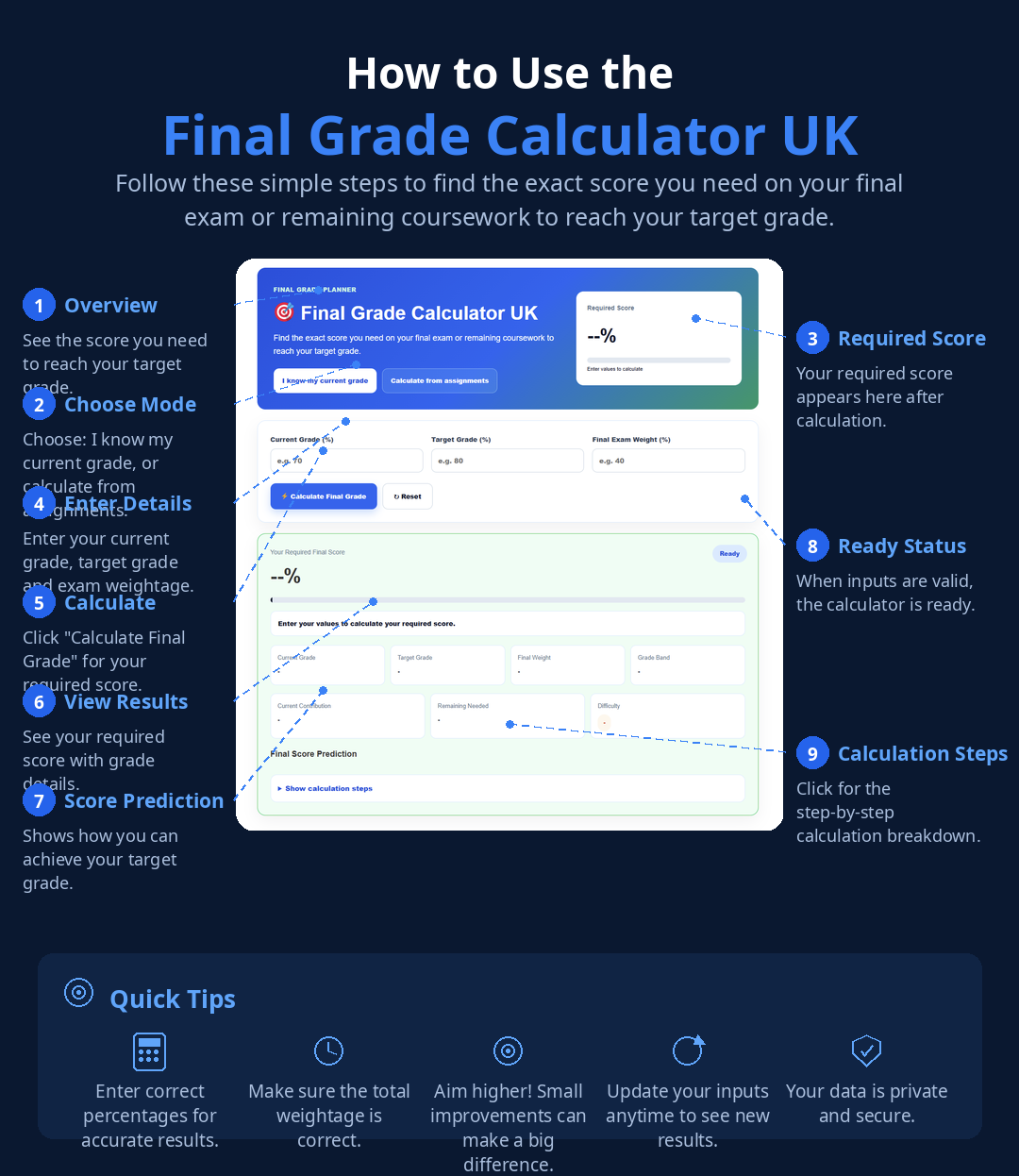
Click Here: Final Grade Calculator UK
There Is No Single UK University Results Day
A-level results day works because one body (the exam boards) releases everything at once. Universities have no equivalent. Each institution runs its own exam boards, sets its own meeting dates, and publishes through its own student record system. The result is a results season that stretches from early June to late September, with Scotland typically running a week or two ahead of England.
Your university publishes its results calendar in advance — usually on a publication of results or assessment and results page on the student intranet. Find it in January, not June. It tells you the board meeting dates, the release dates for finalists and continuing students, and the separate dates for resit results. The University of Reading, for example, publishes an exact 2025/26 calendar: provisional finalist classifications on Monday 29 June 2026, confirmed on Friday 10 July, Part 2 progression decisions on Monday 13 July, Part 0 and Part 1 on Tuesday 14 July, and resit progression on Friday 28 August — all by email and the student portal.
University Results Day Dates: A Typical Academic Year
Exact dates move every year, but the shape of the calendar barely changes. Here is what a normal year looks like at most English universities:
| When | What happens | What you see |
| January exams to February | Semester 1 marks released | Provisional marks on the portal — guidance only |
| May-June | Summer exam boards meet | Nothing yet — marking, moderation and external sampling are still running |
| Mid June-early July | Main exam boards ratify marks | Results day: confirmed marks, progression decisions and finalist classifications |
| July-August | Certificates and transcripts processed | Degree documents dispatched; graduation ceremonies |
| August | Resit/referral period | You sit the failed assessments again |
| Late August-early September | Resit boards meet | Nothing yet |
| September | Resit results published | Second results day — often about a week before the new term starts |
Notice the two results days in that table: the main release in June/July and the resit release in September. If you are referred to August resits, your summer results page may show a decision (referred) rather than a full set of marks — more on that below.
When Each University Publishes: Real Examples
To show how much dates vary, here are real published examples from university results pages:
| University | Main results | Where they appear |
| UCL | Boards meet mid-late June; results emailed early July (e.g. Thursday 6 July) and viewable on the portal from the following Monday | Portico |
| Reading | Provisional finalist classifications Monday 29 June 2026; confirmed Friday 10 July | Email and student portal |
| Edinburgh | Awards published 12 noon Monday 15 June 2026; continuing-student progression 12 noon Tuesday 30 June 2026 | MyEd |
| Leeds | Usually the first or second week of July | Minerva |
| Manchester | Boards meet late June/early July; definitive results very soon after | Campus Solutions (via My Manchester) |
| Nottingham | Resit results late September (e.g. Tuesday 24 September 2024) | Blue Castle |
| York | Progression boards meet in July; resit results no later than the end of the third week of September | Student record system |
A few things to note in that table. Edinburgh’s school publishes awards at a precise hour — 12 noon — while Manchester simply says very soon after the boards meet. Edinburgh also splits its release: finalists learn their awards on 15 June, but continuing students wait until 30 June for progression decisions. And at Nottingham, the September date is for resit results, which arrive through the same Blue Castle system — students there are warned that the portal slows badly at release time and asked not to hammer the refresh button.
Where Your Results Appear — and the Rules Around Release
Results come to you, not the other way round. At most universities you get an email to your university account on the day, and the full breakdown appears in the student record system — UCL’s Portico, Manchester’s Campus Solutions, Nottingham’s Blue Castle, Leeds’s Minerva, Edinburgh’s MyEd. Oxford publishes final results on its system called Evision. Get into the habit of checking your university email, not just the portal: UCL, for example, emails results on the day itself, a few days before they are viewable on Portico.
Three practical rules most students only discover by accident:
- Results are never given out by phone. If you call the registry on results day, they will tell you to check the portal. Plan around this — do not book yourself anywhere with no signal at release time.
- Unpaid debts can block your results. Manchester blocks online results until tuition, accommodation and library debts are cleared. Check your finance account in June, not July.
- Marks must not appear on public noticeboards. Nottingham’s policy is explicit: results go through the record system, not pinned to a wall. If someone posts a results list in a group chat, treat it as gossip until you see your own portal.
Provisional vs Confirmed: The Two Words That Matter Most
Every mark you see during the year is provisional. It has been marked and probably moderated by your department, but the exam board has not ratified it — and until that happens, it can move in either direction. Manchester says it plainly: January marks are presented for guidance only. They may go either up or down at the Examiners’ meeting in June/July. LSE gives the clearest sector definition: provisional marks are department-reviewed and uploaded to the student record, but not ratified by the School Board of Examiners; final marks are ratified by both the department and the board, and will not change.
The same split applies at every university in the table above. At UCL, provisional marks may be released under a formal protocol, but only the exam board confirms final marks. At York, marks stay provisional until ratified by the Exam Board and SCA on behalf of Senate. At Edinburgh, MyEd shows grades roughly six weeks after each assessment, but a grade is not final until ratified. And in July, LSE undergraduates receive numerical marks but no classification or progression information at all until ratification is complete.
Why does this matter in practice? Because provisional marks create two classic mistakes. The first is celebrating (or despairing) too early: a 69 that becomes a 70 after moderation, or a 70 that drops to 68, is entirely normal. The second is telling an employer or a masters admissions tutor a classification based on unratified marks. If you want to understand the machinery between marking and that final number, our guide to what happens at a university exam board walks through every stage.
Reading Your Results Page: Marks, Decisions and Annotations
When your results go live, expect three layers of information rather than one clean number. First, your module marks — the percentage for each module. Second, your credits — whether each module’s credits were awarded. Third, and most important, the board’s decision: progress, referred to resits, repeat the year, or your final classification. Read the decision line before you do any arithmetic of your own; it is the board’s verdict, and it already accounts for condonement, compensation and borderline rules you cannot see.
Expect the unexpected in the annotations. A mark shown as 40 (CAP) is not a 40 you earned — it is a capped resit mark, where the cap replaced whatever you actually scored. R flags a resit, COND a condoned fail. Our university transcript decoder lists every annotation you are likely to meet, and it is worth keeping open in a second tab while you read your results.
Also expect uneven timing. Edinburgh students report that there is no results day in practice — final-year students get awards first, then other years follow over a fortnight, and you might see one module’s result then wait two weeks for the rest. At some universities, referred students initially see an overall decision only, with the full per-module breakdown arriving within a week or two. Different coursemates seeing different things on the same day is normal.
Worked Example 1: Sara Reads Her Portal and Checks Her Year Average
Sara is a second-year student with six 20-credit modules. On results day her portal shows: 64, 61, 58, 66, 59 — and one module marked 40 (CAP). Her first attempt at that module had been a 32, so she sat a resit in August and the board has capped the module at the 40 pass mark. She wants to check her year average herself. The arithmetic is a credit-weighted mean:
Total marks = 64 + 61 + 58 + 66 + 59 + 40 = 348. Total credits = 6 x 20 = 120. Year average = 348 / 6 = 58.0% (equivalently, 348 x 20 = 6,960 credit-weighted points / 120 credits = 58.0%).
Two things Sara should not miss. First, the 40 is the cap, not her resit score — if she actually scored a 55 on the resit, it is the 40 that counts toward her average, and no amount of arguing changes it. Second, these numbers only become final when the board ratifies them: Manchester’s warning applies here — presented for guidance only, they may go either up or down. If 58.0% leaves her near a classification border, our guide to borderline grades and discretionary uplift explains what boards do at the edges.
What Deferred Decision and Pending Mean
Sometimes the portal does not show marks at all — it shows deferred decision or pending. This does not mean you failed. It means the board could not reach a decision yet. Cranfield’s assessment rules describe the board’s three options explicitly: confirm the award, defer the decision pending further work, or fail — and at UCL, a board may defer the decision and refer the case up to the Faculty Board where the picture is incomplete.
Common reasons include an unresolved extenuating-circumstances claim, an academic-misconduct investigation that has not concluded, a missing mark (for example a script still with the external examiner), or a module caught in a borderline review. If your deferral comes from accepted mitigating circumstances, the usual outcome is a deferred assessment — you sit it as if for the first time, with no penalty and the attempt not counting against your resit limit (Westminster’s regulations make the same point: deferral follows accepted circumstances and does not count as an attempt).
If you see pending, read the accompanying letter before you read anything else. It will say what is outstanding and what the board needs from you. Then email your department — do not just wait. And if a misconduct process is the reason, our guide to academic misconduct penalties and hearings explains your rights while it runs.
When Resit and Referral Results Come Out
Fail a module in June and your calendar gets a second act. Resits are typically sat in August, the resit boards meet in late August or early September, and results arrive in September — usually about a week before the new term starts. Nottingham published its 2024 resit results on Tuesday 24 September; York tells students to expect resit results no later than the end of the third week of September; UCL releases late-summer-assessment results within five working days of faculty approval after its late-September boards.
Plan for this date the way you planned for July. If you are a finalist, your graduation may be pushed to the winter congregation. If you are continuing, you may start term not knowing whether you have progressed — universities know this is stressful, which is why most set a hard deadline of roughly a week before teaching starts. Our referrals guide covers the resit rules themselves; the point here is that September is a genuine second results day with the same portal, the same provisional-to-confirmed logic, and the same appeal deadlines.
Worked Example 2: Tom’s Failed Module — Condoned Fail vs Capped Resit
Tom’s June results show five module marks — 64, 61, 58, 66, 59 — and one fail at 34 (all 20-credit modules). His board has two possible routes, and the difference between them is worth understanding before you assume a resit is better.
Scenario A — the board condones the fail. Condonement lets Tom keep the 34 and progress without a resit. His year average uses the actual marks: 64 + 61 + 58 + 66 + 59 + 34 = 342; 342 / 6 = 57.0%. He keeps his credits, progresses with his cohort, and revises nothing over the summer.
Scenario B — the board refers him to an August resit. Tom revises all summer, sits the resit, and genuinely scores a 71 — but the resit is capped at 40. His year average becomes 64 + 61 + 58 + 66 + 59 + 40 = 348; 348 / 6 = 58.0%.
The uncomfortable truth: a summer of revision bought Tom exactly one percentage point on his year average (57.0 to 58.0), because the 40 cap swallowed his genuine 71. Which route is better depends entirely on the board’s regulations — some universities condone fails automatically within limits, others do not condone at all — so check your regulations before deciding how to feel about a referral. Our condoned pass guide explains when boards let you progress without a resit.
If a Mark Looks Wrong: Your First 72 Hours
Results day emotions are unreliable witnesses. Before you act, work through this checklist in the first ten minutes:
- Use the official portal link only. Do not trust screenshots from group chats — log in and read your own page.
- Ask the department office for an administrative check — SOAS’s regulations describe exactly this step, for cases where marks may have been calculated or recorded wrongly. What you cannot do is ask for a re-mark because you disagree with the academic judgement; no UK university offers that. A formal appeal challenges the process (was there a procedural error? was your evidence handled correctly?), not the marker’s opinion. Our guides to asking for a remark and appealing a university grade lay out both routes with real deadlines, and if illness or a crisis affected your exams, read the extenuating circumstances guide before the deadline passes.
- Screenshot your own page. You want a timestamped record of exactly what was published, including annotations like (CAP) and the board’s decision line.
- Read the full decision letter, not just the numbers. The letter states your progression or classification decision, any referral, and — critically — the deadline for challenging anything.
- Note the appeal deadline immediately. These are short: SOAS, for example, allows 15 working days from formal notification for a formal appeal, and other universities run on similar tight windows. Miss it and the route closes.
- Do not post your marks publicly. Screenshots travel; a mark you later challenge sitting on social media helps nobody.
After Results Day: Certificates, Transcripts and Graduation
Results day is not the end of the paperwork. Your degree certificate and formal transcript follow on a slower timetable — and the two move at very different speeds. UCL dispatches degree certificates and transcripts within five months of the main-summer conferral, and its e-transcript plus Statement of Award are available from the day after results. Edinburgh mails academic statements within ten working days (fifteen in busy periods), with interim statements available between award confirmation and graduation. Leeds issues official transcripts after results are published at the end of July.
What this means in practice: if you need proof of your degree for a job or a masters application, do not wait for the certificate — order or download the transcript or statement of award first. Digital documents (Edinburgh’s electronic document service, UCL’s e-transcript) exist precisely because the paper certificate takes months. And your HEAR — the Higher Education Achievement Report — updates on its own cycle; our transcript guide explains how the HEAR, the transcript and the certificate differ.
One more thing worth doing before results day: predict your own classification. Our companion guide to predicting your final degree classification before results day walks through the same weighted-average arithmetic the boards use — so July holds no surprises.

When do UK universities release results?
Most universities publish main-session results in late June or early July, after the summer exam boards meet. Exact dates vary: UCL emails results in early July, Reading confirms finalist classifications on 10 July, Edinburgh publishes awards at 12 noon on 15 June, and Leeds usually releases in the first or second week of July. Resit results follow in September.
Are my marks final when I see them on the portal?
Not necessarily. Marks are provisional until the exam board ratifies them. Manchester describes January marks as presented for guidance only, warning they may go either up or down at the June/July examiners meeting. Only ratified marks will not change.
Why has my friend got results and I have not?
Releases are batched, not simultaneous. Some universities split by year group (Edinburgh publishes finalist awards before continuing-student progression decisions), and some students’ decisions are deferred while a case is resolved. Different coursemates seeing different things on the same day is normal.
What does a deferred decision mean on my results page?
It means the exam board could not reach a decision yet, not that you failed. Common reasons include an unresolved extenuating-circumstances claim, an ongoing academic-misconduct investigation, or a missing mark. Read the accompanying letter, then contact your department.
Can I appeal because I think a mark is wrong?
No. There is no re-mark on academic judgement at UK universities. Ask the department office for an administrative check first if you suspect a calculation or recording error. A formal appeal challenges the process, not the marker’s opinion, and deadlines are short (for example, 15 working days at SOAS).
When do resit results come out?
After the August resit period, when the resit boards meet in late August or early September. Most universities publish resit results in September, usually about a week before the new term starts (for example, Nottingham published 2024 resit results on 24 September).
Will the university tell me my results by phone?
No. UK universities do not give results out over the telephone. Check your university email and the student record portal (such as Portico, Minerva, Blue Castle or MyEd) on the published release date.
When will I get my degree certificate and transcript?
Weeks to months after results day. UCL dispatches certificates and transcripts within five months of the summer conferral, while Edinburgh mails academic statements within ten working days. Digital transcripts and statements of award are usually available much sooner than the paper certificate.
Conclusion
University results day is a season, not a day — and once you see it that way, it becomes manageable. Find your university’s published results calendar in January. Expect June/July for the main release and September for resits. Treat every number you see before the board ratifies it as provisional. When the day comes, read the decision letter before the marks, screenshot your page, and note the challenge deadline before you do anything else.
The students who struggle at results time are rarely the ones with the worst marks — they are the ones who did not know the system. A capped resit mark that feels wrong is usually the cap working as designed. A deferred decision is usually paperwork catching up, not a verdict. And a mark you want to dispute has a short, formal route — administrative check first, appeal on process, never a re-mark on judgement. Know the calendar, know the difference between provisional and confirmed, and know your first-ten-minutes checklist, and results day becomes what it should be: information, not an ambush.

![Read more about the article How Group Project Marks Are Calculated at UK Universities [2026]](https://gradeforuni.com/wp-content/uploads/2026/10/featured-group-project-marks-300x192.png)

![Read more about the article Does Attendance Affect Your Grades at UK Universities? Monitoring Rules Explained [2026]](https://gradeforuni.com/wp-content/uploads/2026/10/featured-attendance-grades-uk-300x192.png)