
![You are currently viewing How to Interrupt Your Studies at a UK University: Fees, Funding & Visa Rules [2026]](https://gradeforuni.com/wp-content/uploads/2026/10/featured-interrupt-studies-uk.png)
How to Interrupt Your Studies at a UK University: Fees, Funding & Visa Rules [2026]
Sometimes life refuses to wait until graduation. A health crisis, a family emergency, money running out, or plain burnout can make continuing your degree impossible for a while — and every UK university has a formal mechanism for exactly this situation: interrupting your studies.
An interruption (also called intermission, suspension of studies, or temporary withdrawal, depending on your university) is a formally approved pause. You keep your registration but stop being enrolled: your marks so far are frozen, no new tuition accrues beyond the fee band you’ve already entered, and — critically — you get to return to the same course at the same point. It is not the same as withdrawing, and it is definitely not the same as simply stopping turning up. The informal route leaves you with failed modules, a full year’s fee liability, an overpaid maintenance loan, and, if you’re on a Student visa, a curtailed right to stay in the UK.
This guide walks through the whole thing: the rules that decide whether you can interrupt your studies, what happens to your marks and tuition fees (with the actual 25/50/100% fee bands), how Student Finance reassesses your loans and the 60-day health rule most students have never heard of, the 60-day visa trap for international students, the housing and council-tax details people forget, and a step-by-step application checklist.
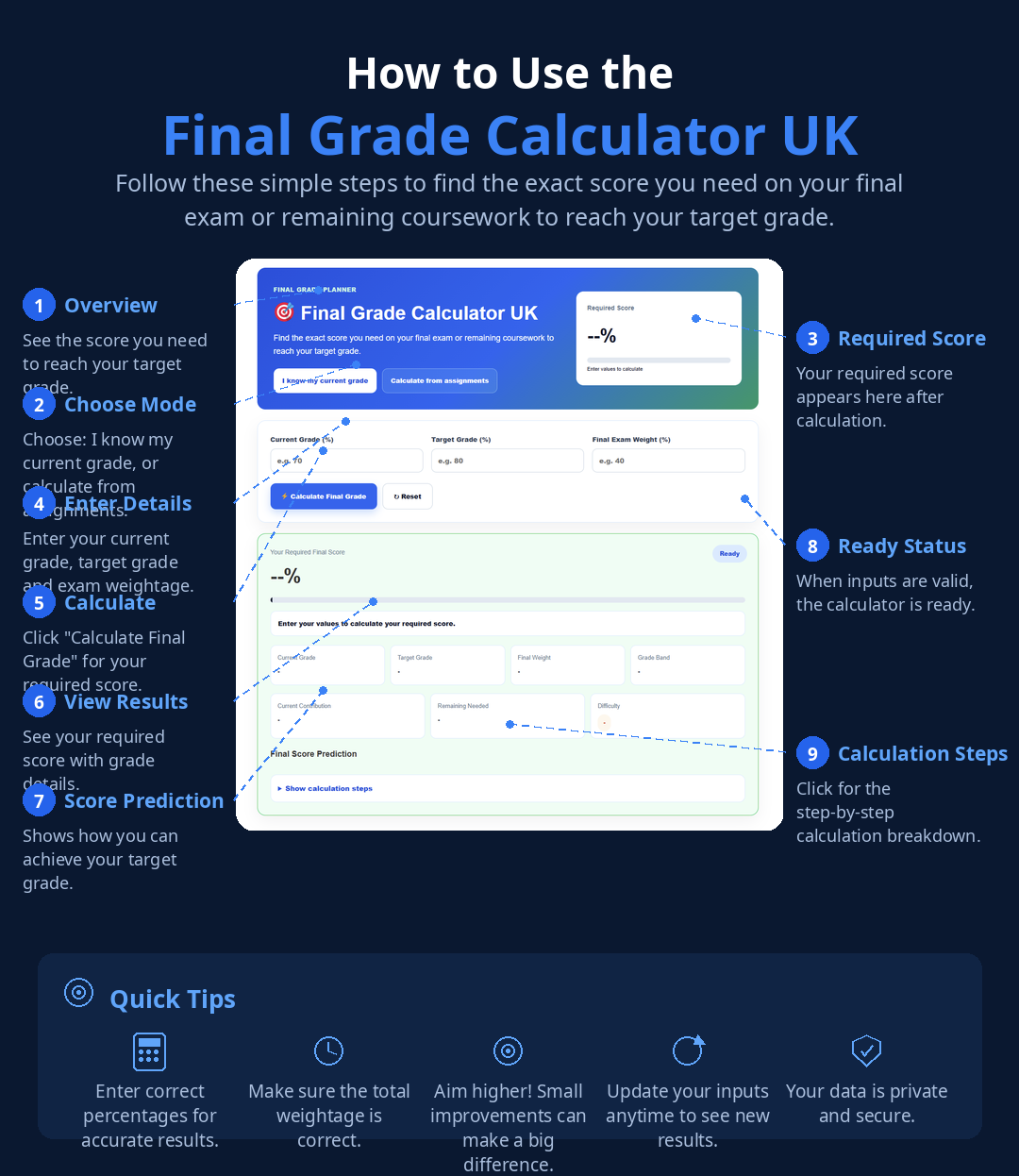
Click Here: Final Grade Calculator UK
What “interrupting your studies” actually means
An interruption of studies is a university-approved break from your degree. The formal position at most UK universities is captured well by Queen Mary’s registry: while you’re interrupting, you remain registered but you cease to be enrolled. That single distinction drives almost every consequence in this guide — registered means the university still considers you its student and keeps your academic record; not enrolled means you can’t attend teaching, sit exams, use most campus facilities, or count as a full-time student for funding and immigration purposes.
The terminology is the first thing that trips students up, because your university may call it something different. The underlying mechanism is the same, but you need to search your own university’s website for the right term:
| Term your university may use | Used by | What it means |
|---|---|---|
| Interruption of studies | Lincoln, Queen Mary, UCL, Nottingham, Bedfordshire | The standard term: formal approved pause, usually one academic year at a time |
| Intermission | University of Law | Same mechanism; minimum six months, standard length one year |
| Suspension of studies | Student Finance England, UWE, NCG colleges | The funding body’s term for any pause — this is the word SFE uses on its forms |
| Temporary withdrawal | Queen’s Belfast, some Scottish universities | Same idea, framed as a withdrawal you intend to reverse |
| Leave of absence | Some research-degree regulations | Usually for shorter or PGR-specific pauses |
Whatever it’s called, the formal route protects you in ways the informal one doesn’t. If you simply stop attending without approval, your university will record you as absent, you’ll fail assessments you don’t submit, you’ll remain liable for the full year’s tuition, Student Finance will still treat you as enrolled until someone tells them otherwise, and a Student-visa sponsor is legally required to report prolonged non-attendance to the Home Office. Formal interruption converts all of that into a managed pause with defined consequences — most of them far gentler.
Why students interrupt: the real reasons
Universities see interruption requests for a consistent set of reasons, and the regulations explicitly list most of them: illness (physical or mental), maternity, paternity or adoption leave, bereavement, caring responsibilities, financial difficulties, and employment or placement opportunities. Bedfordshire’s interruption page adds “personal reasons” and even “taking a gap year” to the list — the door is wider than many students assume.
There is one reason that will get your request refused, though, and it’s worth stating plainly: you cannot interrupt as a way of “stopping the clock” on poor academic progress. Queen Mary’s research-degree regulations say this explicitly, and taught-course regulations work the same way in practice — if you’re failing because you’re not doing the work, the exam board will deal with that through its normal progression rules (referrals, repeats, or withdrawal), not by granting you a pause. Interruption is for circumstances that are stopping you from engaging, not a tactic for dodging results. If your situation is really about a few bad weeks rather than months, mitigating circumstances and deferred assessments are the right tool instead — see our extenuating circumstances guide.
The rules that decide whether you can interrupt
Interruption is never automatic. You apply, your school or department considers it, and only then does it take effect. Across UK universities the approval rules converge on four points:
1. Apply before the deadline — and the deadline is earlier than you think. Bedfordshire requires year-long interruption applications before course registration closes (for an October start, that’s the end of teaching week 2), and semester-length interruptions before that semester’s teaching begins. Queen Mary sets the cut-off as the day before the relevant assessment period starts for most programmes. Miss the window and you’re committed to the term, fees and all.
2. One academic year at a time, two years maximum. Lincoln’s general regulations put it plainly: the usual period of interruption is one academic year at a time, up to a maximum of two years, with anything further at the university’s discretion. UWS regulations say the same in different words — an interruption won’t normally exceed one academic session, and the total across your whole programme won’t normally exceed two. The University of Law’s intermission policy sets a minimum of six months and a maximum of one year, with further intermissions decided by a three-person senior panel.
3. The interruption counts toward your maximum registration period. Every degree has a maximum time limit for completion (commonly the course length plus two or three years). Agreed interruptions sit inside that limit — they don’t extend it. This matters most if you’ve already had a difficult academic history: a student who’s repeated a year and then interrupts for two years can find the registration clock running out.
4. Part-year interruptions are possible, but your return date must fit the timetable. UWS gives the cleanest example: complete Term 1 of third year, interrupt for Term 2, and you return the following academic year to complete just Term 2 of third year. Queen Mary’s advice service explains the semester equivalent — interrupt before the January assessment period and you may be able to resume the following September and re-take Semester A, or resume the following January to sit the January exams and continue into Semester B. The principle is always the same: you come back at the point you left, when that teaching next runs.
What happens to your marks when you interrupt
This is the part students worry about most, and the news is good: your marks are frozen, not wiped. Modules you’ve completed keep their marks. Modules you haven’t finished wait for you — you resume them at the same point the following year, with the same attempt status. Nobody re-marks your January exams because you took a break in March.
Two quirks are worth knowing. First, at some universities you cannot sit outstanding assessments during the interruption itself — the University of Law’s intermission policy states this outright, so don’t plan a “quiet year of resits.” Second, facility access varies: some universities cut access to buildings, libraries and IT on interruption, while the University of Law explicitly keeps virtual learning environment access open so students can prepare for their return. Check your own institution’s position before you assume you’ll have library access.

Tuition fees: the 25/50/100 bands that decide your bill
Your fee liability for the year is set by your last date of attendance — the date you and your department agree and record on the interruption form. Most English universities use the same three-band structure, and London South Bank’s published 2026/27 tables give the exact dates:
| Interruption date (Sept 2026 starters) | Tuition fee charged | What it means in cash (£9,790 fee) |
|---|---|---|
| By 19 October 2026 | No charge | £0 — full refund |
| By 4 January 2027 | 25% | £2,447.50 |
| By 12 April 2027 | 50% | £4,895 |
| After 12 April 2027 | 100% | £9,790 — the full year |
Nottingham’s funding pages describe the identical banding in term language: in attendance on day 1 of Term 1 (or three weeks in for new students) means 25% of the fee, day 1 of Term 2 means 50%, day 1 of Term 3 means 100%. Student Finance then reduces your tuition fee loan to match, and any difference is settled between the university and the Student Loans Company — you don’t get a bill or a refund directly.
Worked example — Amara’s mid-year interruption. Amara starts her second year in September 2026 (£9,790 fee). In late March 2027 a family crisis means she has to go home, and her agreed last date of attendance is 26 March 2027. That falls between 4 January and 12 April, so she’s charged 50%: 0.50 × £9,790 = £4,895. Her tuition fee loan is reduced to £4,895 for the year, and when she returns in September 2027 she’ll need funding for the remaining year as normal. If she’d managed to hold on until the same point but her crisis had hit in early January instead, the same interruption would have cost only £2,447.50 — which is why the date on the form matters enormously, and why you should agree it carefully with your department rather than letting it default to the day you stopped logging in.
One timing note from UWE’s money advisers: if you interrupt at the end of the academic year — 31 August for September starters — you’re unlikely to face any fee or funding overpayment at all, because there’s nothing left in the year to be overpaid. The expensive interruptions are always the mid-year ones.
Student finance: what changes the day you stop
Your university notifies Student Finance of the change of circumstances, and SFE reassesses your entitlement from your last date of attendance. The next instalments of your maintenance loan simply don’t get paid, and if you’ve already received money covering weeks after your suspension date, SFE will ask for the overpayment back — either as a direct repayment or deducted from next year’s loan, whichever you agree with them.
Worked example — Zara’s maintenance overpayment. Zara receives her maintenance loan in three termly instalments. She suspends partway through Term 2, which at her university is a 70-day term. Her agreed last date of attendance is 26 days into the term. Using illustrative figures: her Term 2 instalment is £3,200, meant to cover the full 70 days. She’s only entitled to 26/70 of it: 26 ÷ 70 × £3,200 = £1,188.57. The remaining £2,011.43 is an overpayment SFE will ask her to repay — or, if she’d rather, have deducted from next year’s maintenance loan. (UWE’s money advisers publish an almost identical worked example with £2,441.33 and 26 days’ attendance producing a £1,534.55 overpayment.) Talk to SFE early if you can’t repay: their advisers are, by consistent student report, reasonable about affordable repayment plans.
Now the rule most students have never heard of: the 60-day health extension. If you’re interrupting for health reasons during the academic year, tell your university to record “Health” on the interruption form — Nottingham’s funding team explains that SFE then adds 60 days onto your last date of attendance when reassessing your maintenance entitlement. An SFE adviser on The Student Room confirms the mechanism: the university must send an electronic change-of-circumstances task explicitly stating the suspension is for health reasons, and SFE’s assessors process the extra 60 days from that. It only works for suspensions, not withdrawals, and only when the health reason is formally recorded — a GP letter shown to your tutor but never entered on the form doesn’t count.
Beyond the 60 days, Student Finance has discretion to keep paying maintenance during a suspension where stopping it would cause financial hardship — for reasons including ill health, bereavement, or caring responsibilities. UWE’s student money service and Leeds Beckett’s money advisers both describe the same process: you phone SFE (0300 100 0607) and ask for a Financial Hardship Confirmation form, complete it with evidence such as three months of bank statements, and SFE may approve full or partial continued support. During a full-year suspension, hardship-assessed support can even continue for the year — and in that case, the year does not count as a year of previous study when SFE calculates your future tuition-fee funding.
Worked example — Priya’s funding years. SFE funds the normal length of your course plus one extra “gift year” (course length + 1 − previous study). Priya is on a 3-year degree and interrupts for the whole of what would have been her second year. Because a full-year suspension doesn’t count as previous study, her funding calculation on return is 3 + 1 − 0 = 4 years of funding available for 3 years of study — her gift year is intact. Compare that with repeating the year instead: our repeat-a-year guide shows how a repeat consumes the gift year, leaving no safety net for a second problem. If there’s any chance you’ll need the gift year later, a clean full-year interruption protects it better than a repeat does.
Two final funding notes: you won’t receive university bursaries or scholarships while interrupted (Nottingham confirms this), and NHS students lose NHS Learning Support Fund or NHS bursary payments for the interruption period — contact the NHSBSA helplines if that affects you.
The visa trap: 60 days that end your right to stay
If you’re in the UK on a Student visa, interruption is the highest-stakes decision in this guide. Your university is legally required to report any interruption to UK Visas and Immigration, and the 60-day rule then bites: if your interruption lasts more than 60 days, your sponsorship will almost certainly be withdrawn. Queen Mary’s visa advice states it directly — interrupt for more than 60 days and you’ll need a new CAS and a new Student visa when you return. Queen’s Belfast’s visa briefing puts the policy the same way: sponsorship is usually only continued for up to 60 days.
What “withdrawn” means in practice, per UCL’s published guidance: you receive an email confirming sponsorship has been withdrawn, and you must leave the UK within 60 days of the university’s report to UKVI. When you’re ready to return, you apply for a fresh CAS from the university’s visa compliance team and make a new Student visa application from outside the UK — meeting the maintenance and any other requirements all over again.
Nottingham’s visa pages add two refinements students routinely miss. First, suspending within the first four months of your programme leads to sponsorship withdrawal regardless of how short the break is — there is no 60-day grace in your first term. Second, multiple suspensions within a six-month period are counted cumulatively toward the 60 days. And if you fail to progress and end up interrupting, withdrawing, or resitting out of attendance, each of those outcomes can affect sponsorship — Queen Mary flags this chain explicitly for students taking August resits who then don’t progress.
Worked example — Daniel’s year out. Daniel, an international student, interrupts in October 2026 for a full academic year to deal with a family situation at home. The break is far longer than 60 days, so his university reports the interruption and withdraws sponsorship. He must leave the UK within 60 days of that report. In summer 2027, when he’s ready to return, he requests a new CAS, prepares fresh financial evidence, and applies for a new Student visa from his home country before travelling back. His completed first-year marks are frozen and waiting for him — but his immigration permission had to be rebuilt from scratch. The lesson: talk to your university’s international advice team before submitting the interruption form, not after. Lincoln, Queen Mary and every other university say the same thing.
The bits students forget: housing, council tax and benefits
Lincoln’s advice service lists the three things students most often overlook — and they’re all about money you keep spending while you’re not studying. Accommodation contracts don’t pause: your tenancy or halls contract runs on regardless of your student status, so check the early-release or contract-takeover clauses before you assume you can just stop paying rent. Council tax is the quiet one: full-time students are exempt, but that exemption is tied to your enrolled status, and an interruption can end it — speak to your university advice service and your local council rather than discovering a bill six months later. And enrolling or re-enrolling at the wrong moment can itself create problems — Lincoln specifically warns that enrolling when you’re about to interrupt can have knock-on effects for funding, so get advice on timing before you click anything.
On benefits: while you’re still registered as a full-time student, you usually cannot claim Universal Credit — the student rules still treat you as a student. Leeds Beckett’s money advisers note the main exception: if you’ve taken time out because you’re ill or caring for someone, have now recovered or finished caring, and are waiting to get back onto your course, you may be able to claim. The standard student exceptions (PIP with limited capability for work, single parents, student couples with a child) apply as usual. This is genuinely complicated territory — a 15-minute appointment with a student money adviser is worth more than a week of forum-reading.
How to apply: the 7-step checklist
Do these in order, and don’t skip the advice appointments — every university’s interruption page says some version of “talk to us first,” and the funding and visa consequences above are why.
- Talk to your personal tutor or programme leader first. They’ll tell you whether your situation fits interruption or whether something lighter — mitigating circumstances, a short authorised absence — would do. Colleges like NCG make this the mandatory first step.
- Book the advice service. A specialist adviser will walk through funding, tenancy, council tax and benefits implications for your specific situation. Bring your accommodation contract and any medical evidence you have.
- If you’re on a Student visa, see the international advice team before anything else. The 60-day sponsorship rule means this appointment can change your whole plan.
- See a student money adviser to model exactly what SFE will do with your loans — including whether the 60-day health extension or a hardship application applies to you.
- Submit the interruption application before the deadline — before registration closes for a year-long break, before teaching starts for a semester break (Bedfordshire), or before the assessment period cut-off (Queen Mary).
- Agree your last date of attendance with your department and make sure it’s recorded correctly on the form — it sets your fee band, your SFE reassessment date, and your 60-day health window.
- Sort the practicalities: notify SFE/your funding body yourself as well (your university notifies them too, but belt and braces), deal with your accommodation contract, return library materials, and tell your local council about your change of status.
Interrupt, defer, repeat or withdraw? How to choose
Interruption is one of five exits from a bad semester. Picking the wrong one is expensive, so here’s the decision framework — each option wins in a different situation:
| Option | Choose it when… | Watch out for… |
|---|---|---|
| Interrupt studies | You need months out (usually a full year), want the same course back, and your marks so far are worth protecting | Fee bands, SFE reassessment, the 60-day visa rule, max two years total |
| Mitigating circumstances / deferred assessments | You need weeks, not months — a bad patch, one crisis, a few missed deadlines | Only covers the affected assessments; see our extenuating circumstances guide |
| Repeat the year | You’ve failed the year and want a fresh attempt at everything, with teaching | Consumes your SFE gift year; full repeat-year costs — see our repeat-a-year guide |
| Trail credits / referrals | You’re only a few credits short and the university lets you carry them | Capped resit marks; see our referrals guide |
| Withdraw | You don’t want to come back to this course at all | No automatic return; but exit awards (CertHE/DipHE) may recognise what you’ve done |
The most common mistake is treating these as interchangeable. A student who needs three months for a health issue but interrupts for a full year pays a full year’s fee-band consequences and burns a year of their registration limit for no reason — mitigating circumstances would have done the job. Conversely, a student with a year-long problem who tries to limp through on deferred assessments ends up failing everything and repeating anyway, gift year gone.
Coming back: how to return well
Returning is a process, not a date. Contact your school office in the period before you intend to come back to confirm your academic programme — one university’s form guide suggests your eVision record is typically reopened about six weeks before the semester starts for re-enrolment. If you interrupted on medical grounds, the university may ask for evidence that you’re fit to return (the University of Law reserves the right to require this, including a second medical opinion at its own cost, if the evidence looks thin). Then re-enrol, check your timetable, and confirm which modules and assessment points are waiting for you.
Before you return, do the maths on what’s left. Your frozen marks are the starting point — plug them into the Final Grade Calculator along with your remaining modules to see exactly what average you need from here. Students who return with a clear numerical target settle back in far faster than those who return hoping it works out. And if your break changed your plans entirely — different course, different university — read our transfer guide and appeals guide before you commit to anything.
Frequently asked questions
How long can I interrupt my studies for?
Usually one academic year at a time, up to a maximum of two years across your whole degree — that’s the standard position at universities including Lincoln and UWS, with anything longer at the university’s discretion. The interruption counts toward your course’s maximum registration period, so it doesn’t extend your overall time limit. Part-year interruptions (a semester or a term) are possible at many universities, but your return date has to fit the teaching timetable.
Will I still have to pay tuition fees if I interrupt?
It depends on when you interrupt. Your fee for the year is set by your last date of attendance on a 25/50/100% band structure: interrupt very early (e.g. by mid-October for September starters) and you may owe nothing; by early January around 25%; by mid-April around 50%; after that, the full year’s fee. Student Finance reduces your tuition fee loan to match. Agree the date on the form carefully — it directly sets your bill.
What happens to my student loan when I suspend my studies?
Your university notifies Student Finance, which reassesses your entitlement from your last date of attendance. Future maintenance instalments stop, and any money you’ve already received covering weeks after that date becomes an overpayment you’ll need to repay or have deducted from next year’s loan. Your tuition fee loan is reduced to match the fee band for the year.
Do I get extra funding if I suspend for health reasons?
Yes — the 60-day rule. If your university records the suspension as being for health reasons on the electronic change-of-circumstances notification, Student Finance adds 60 days onto your last date of attendance when reassessing your maintenance entitlement. Beyond that, SFE has discretion to continue maintenance payments where stopping them would cause financial hardship; you apply with a Financial Hardship Confirmation form and evidence such as three months of bank statements.
I’m on a Student visa — can I stay in the UK while I interrupt?
Only for short interruptions. Your university must report the interruption to UKVI, and if the break lasts more than 60 days your sponsorship will almost certainly be withdrawn — you must then leave the UK within 60 days of that report. You’ll need a new CAS and a new Student visa application from outside the UK to return. Suspending within the first four months of your course leads to withdrawal regardless of length at some universities. Always see the international advice team before applying.
Do my marks get wiped if I interrupt my studies?
No — your marks are frozen. Completed modules keep their marks, and unfinished modules wait for you to resume at the same point the following year. You generally can’t sit outstanding assessments during the interruption itself, and access to campus facilities may be restricted, though some universities keep virtual learning environment access open.
Does interrupting use up my extra year of Student Finance funding?
A full-year interruption generally does not count as a year of previous study, so your ‘gift year’ (course length + 1 year of funding) stays intact — unlike repeating a year, which consumes it. This is one of the strongest financial arguments for a clean interruption over a repeat when you need a full year out. Part-year interruptions are reassessed from your last date of attendance instead.
What’s the difference between interrupting and withdrawing?
Interrupting is a temporary, approved pause: you stay registered, your marks are frozen, and you have a defined route back to the same course. Withdrawing ends your registration with no automatic right of return — though you may be eligible for an exit award such as a CertHE or DipHE recognising the credits you’ve earned. If there’s any chance you’ll want to come back, interrupt rather than withdraw.
Conclusion
Interrupting your studies is one of the most protective mechanisms UK universities offer — but only if you use it formally. The formal route freezes your marks, bands your tuition fee to your actual attendance, gives you access to the 60-day health extension on your maintenance loan, and keeps your Student Finance gift year intact for a full-year break. The informal route — just stopping — gives you none of that: failed modules, full fee liability, overpaid loans, and a curtailed visa.
The three numbers to carry away are 25/50/100, 60, and 60: your fee band is set by your last date of attendance, health-related suspensions get 60 extra days of maintenance assessment, and a Student-visa interruption longer than 60 days ends your sponsorship. Get the advice appointments booked before the application, agree your last date of attendance deliberately, and check the deadline for your start month — then take the break you need without the financial wreckage.
When you’re ready to come back, your frozen marks are your foundation, not your verdict. Run them through the Final Grade Calculator, see exactly what your remaining modules need to average, and return with a plan instead of a hope. A year out, done properly, doesn’t end a degree — it just reschedules it.

![Read more about the article Do UK Universities Drop Your Lowest Module Marks? Discounting Rules Explained [2026]](https://gradeforuni.com/wp-content/uploads/2026/10/featured-drop-lowest-marks-300x192.png)
![Read more about the article Does Attendance Affect Your Grades at UK Universities? Monitoring Rules Explained [2026]](https://gradeforuni.com/wp-content/uploads/2026/10/featured-attendance-grades-uk-300x192.png)
![Read more about the article Does Your Degree Classification Matter? What UK Employers Actually Check [2026]](https://gradeforuni.com/wp-content/uploads/2026/10/featured-degree-classification-jobs-300x192.png)