
![You are currently viewing Can Your Degree Classification Change After Graduation? UK Rules Explained [2026]](https://gradeforuni.com/wp-content/uploads/2026/10/featured-classification-after-graduation.png)
Can Your Degree Classification Change After Graduation? UK Rules Explained [2026]
Graduation day feels like a full stop. You cross the stage, collect the certificate, and the classification printed on it — First, 2:1, 2:2 — follows you onto every job application and postgraduate form for the rest of your life. Most graduates never question it. But a small number discover, sometimes years later, that the number on their certificate may not be the number they actually earned.
In October 2026, the family of Ethan Scott Brown — a University of Glasgow geography student who died in December 2024, the day he should have graduated — settled a civil action against the university after its own investigation found he had been incorrectly graded and should have received a 2:1 Honours degree. The error had passed through university staff, two internal examination boards and an external examination board undetected. It is an exceptional and distressing case, but it proves a point every graduate should understand: a degree classification is not unchangeable by definition. There are narrow, specific routes through which it can be corrected — and hard deadlines that close them.
If you or someone you know is struggling, you can call Samaritans free on 116 123, any time of day or night (samaritans.org).
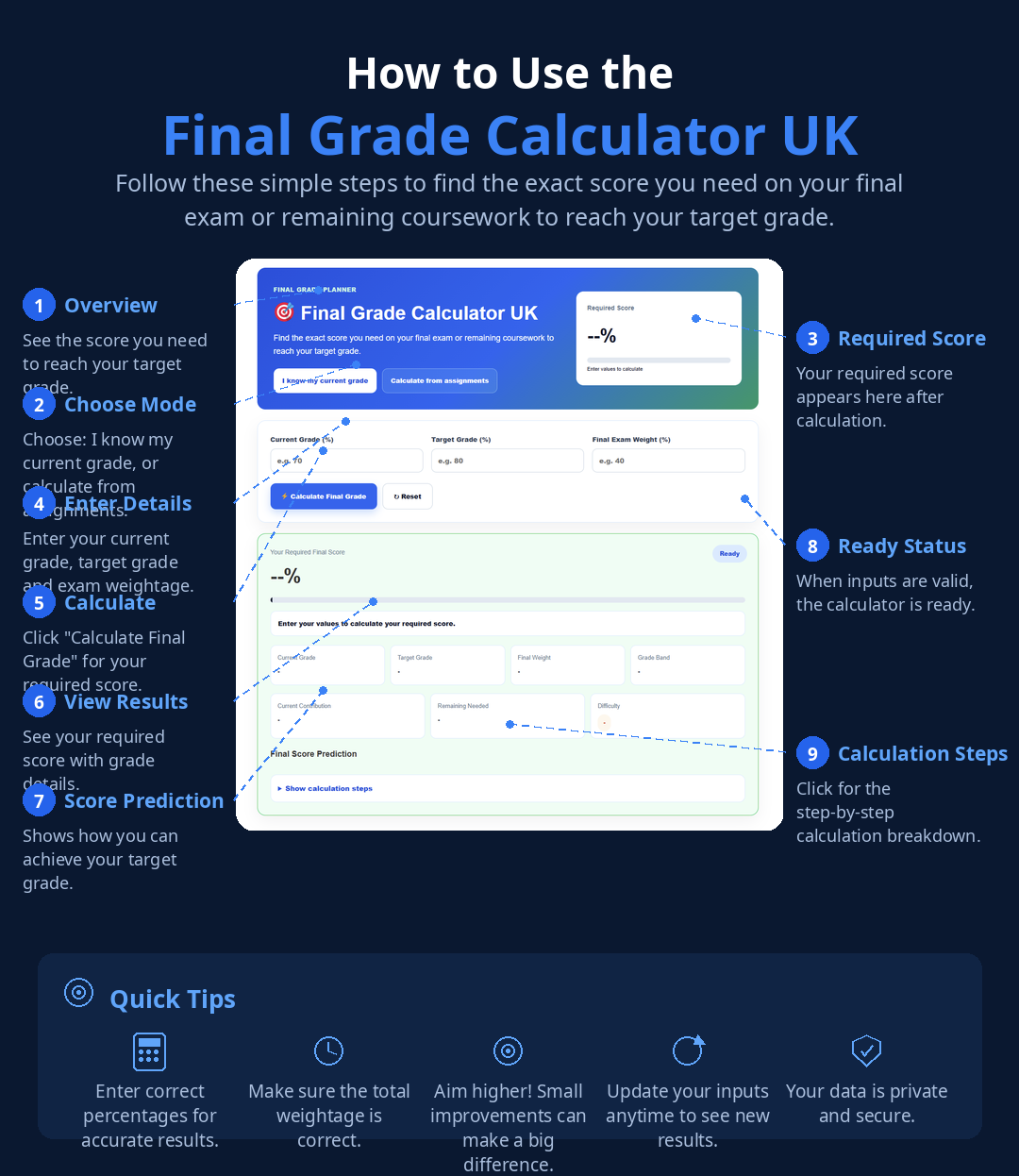
Click Here: Final Grade Calculator UK
The Short Answer: Yes — But Only Through Three Narrow Doors
Your degree classification can change after graduation, but never because you asked nicely, waited a while, or felt you deserved better. It changes only when one of three things happens: the university discovers and corrects a genuine error in your marks or their calculation; a formal academic appeal succeeds; or an external ombudsman finds the university mishandled your case and recommends it be reconsidered. Everything else — regret, near-misses, new evidence about how hard you worked — changes nothing.
The crucial distinction, which most graduates get backwards, is between appeals and error corrections. An appeal is you challenging a board’s decision, and it comes with short deadlines — typically 10 to 30 working days from results — that keep running whether or not you have graduated. Error correction is the university fixing its own mistake, and most university regulations set no time limit on it at all. Confuse the two and you can lose the route that was actually open to you.
Door 1: The University Corrects Its Own Error
This is the most powerful route, and the least understood. Several UK universities’ regulations impose an explicit duty to correct assessment errors whenever they surface — published results, graduation ceremony and all. The University of Edinburgh’s assessment regulations state that where an error is discovered in the marking, calculation, recording or notification of a result, or in the classification of a degree, the university shall correct it and amend its records, whether or not the result or classification has already been published or notified to the student. The university must notify the student, correct any references already given to third parties such as employers, and the graduate returns the old documentation.
UCL applies the same principle in plainer language: if an error in calculating a result is discovered, the actual result achieved — not the one erroneously calculated — will prevail. Its revocation rules go further, expressly allowing a classification to be altered after award where there was an administrative error or where a Board of Examiners reconsiders on the basis of information that was not available at the time. Newcastle’s regulations deem a qualification awarded on publication of the pass list, but reserve the university’s right to correct any errors subsequently identified on it. Glasgow Caledonian’s award regulations are the bluntest of all: there is no limit on the length of time between an award being granted and its correction or revocation for procedural or administrative error.
Note what this route is not. It is not a second opinion on academic judgement — no regulation lets a university re-mark your dissertation three years later because you have reconsidered its quality. It covers the mechanical layer: marks added up wrong, a module recorded under the wrong credit value, a resit cap applied where it should not have been, a condoned pass omitted from the calculation, a transcript line that does not match the mark the examiner actually gave. Our guide to checking your university calculated your marks correctly walks through the six most common error points, and the arithmetic below shows how small a slip needs to be to move a classification.
Door 2: A Successful Academic Appeal — Lodged Before You Graduate
Appeals are the route most students reach for, and the one with the cruellest timing. Every UK university sets a short window for challenging a board decision, and the clock starts at results publication — not at graduation, not when you feel ready. Miss it, and the door shuts regardless of the merits.
| University | Appeal deadline (from results) | Notes |
|---|---|---|
| UCL | 10 working days from official notification | Appeals more than 12 months late are never considered |
| Manchester | 20 working days from publication of results | School handbooks apply the university-wide regulation |
| King’s College London | 15 working days from release of ratified results | Stage One of a two-stage process |
| Kingston | 15 university working days (Stage 1) | 10 further working days to escalate to Stage 2 |
| Edinburgh | 30 working days (final-year undergraduates) | Other undergraduates get 10; appeals 2+ years late never accepted |
| Glasgow | Intention within 10 working days; full grounds 20 working days later | Two-step process |
| Lincoln | 10 working days from the review outcome letter | Follows an initial review stage |
Here is the trap: at several universities, graduating itself extinguishes the right to appeal. Glasgow’s appeals guidance is explicit — if you graduate you are deemed to have accepted the award, so anyone wishing to appeal must not graduate until the process is complete, which usually means missing the ceremony with your peers. Strathclyde’s procedure goes further: graduation is considered acceptance of the award, an appeal against the classification cannot be raised after graduation, and a student who graduates mid-appeal is taken to have abandoned it. Leeds takes the same position as a default: once you have attended the ceremony and been presented with your certificate and transcript, you may not appeal. (Leeds briefly permitted post-ceremony appeals in mid-2024; that exception was removed in November 2024.)
The practical rule is unforgiving but simple: appeal first, graduate second. If you suspect your classification is wrong, lodge the appeal inside the deadline and defer the ceremony — most universities will let you graduate at a later congregation once the appeal concludes. For the full mechanics of grounds, evidence and strategy, see our guide to how to appeal a university grade in the UK, and for the adjacent route of challenging an individual mark, how re-marking and mark reviews work.
Door 3: The Ombudsman — the OIA (and the SPSO in Scotland)
When the university’s internal process is exhausted — or when it refuses to engage — graduates in England and Wales have one external route: the Office of the Independent Adjudicator for Higher Education (OIA). You must complain within 12 months of the date on your Completion of Procedures letter, the document the university issues when its internal appeal and complaint stages are finished. Miss that year, and the OIA will not look at your case.
Be clear about what the OIA is. It is not a higher court of marking. It cannot change your marks, re-mark your work, or substitute its own academic judgement for your examiners’. What it does is review whether the provider applied its own regulations and procedures correctly and whether the outcome was reasonable in all the circumstances. Where it finds a complaint justified, its recommendations typically include the university reconsidering the case under its own procedures (usually within about 90 days), a formal apology, and financial compensation. A recommendation to reconsider is not a guaranteed upgrade — but it forces the university to look again, properly, which is sometimes all that was missing.
Two honest caveats. First, we could not verify any published OIA case summary in which a degree classification was specifically reconsidered following an OIA finding — the OIA publishes case summaries, but none we could locate names a classification change as the outcome, so treat the remedy as documented procedure rather than precedent. Second, the OIA does not cover Scotland: Scottish graduates, including anyone in the Glasgow case’s position, go to the Scottish Public Services Ombudsman (SPSO) instead, and Northern Ireland has its own ombudsman (NIPSO). If you studied in Scotland, do not waste your 12 months writing to the wrong body.
The Reverse Door: Your Classification Can Also Be Taken Away
Corrections cut both ways, and graduates should know this before they start digging. Universities reserve the power to revoke or downgrade an award after graduation — and several set no time limit whatsoever. UCL may revoke any degree if it is discovered at any time that there was an administrative error in the award, that a Board of Examiners on new information determines the classification should be altered, or that the award is cancelled for academic misconduct. Sheffield’s calendar allows Senate to withdraw awards discovered at any time to involve fraud, administrative error, or new information changing the classification. Glasgow Caledonian states there is no limit on the time between award and revocation. Manchester can rescind an award when academic misconduct within it is proven after graduation.
In practice, downward corrections for pure arithmetic error are rare — universities correct errors in whichever direction the arithmetic points, and most discovered errors are neutral or small. The realistic downward risk is misconduct: contract cheating, fabricated data, or plagiarism discovered after award, as our guide to academic misconduct penalties explains. One persistent myth deserves explicit burial: there is no verified “seven-year rule” capping revocation. None of the regulations we read imposes a year cap; they say “at any time” or “no limit”. Anyone quoting seven years is repeating forum lore, not regulation.
Worked Example 1: The Transposed Digit That Flips a 2:2 to a 2:1
Illustrative example — fictional marks designed to show the arithmetic, not a real case.
Take a final-year student on a standard 40:60 weighting (second year 40%, final year 60%). Her second-year average is 58.0%. In final year she takes four 30-credit modules. The marks recorded on her transcript are 62, 60, 56 and 48.
As recorded: final-year average = (62 + 60 + 56 + 48) ÷ 4 = 226 ÷ 4 = 56.5%. Degree average = (0.40 × 58.0) + (0.60 × 56.5) = 23.2 + 33.9 = 57.1% — a 2:2. She graduates, finds work, and never questions it.
Three years later, requesting her university transcript for a postgraduate application, she notices the 48 sits oddly against her other marks and asks the department to check the original exam script. The marker’s total was 68 — a transposed digit in data entry turned it into 48.
Corrected: final-year average = (62 + 60 + 56 + 68) ÷ 4 = 246 ÷ 4 = 61.5%. Degree average = (0.40 × 58.0) + (0.60 × 61.5) = 23.2 + 36.9 = 60.1% — a 2:1. One keystroke, three percentage points, a full classification band. Under regulations like Edinburgh’s or UCL’s, the university corrects the record and reissues the certificate and transcript; the graduate returns the old documents. No appeal deadline applies, because this was never an appeal — it was the university’s error, and the duty to correct it has no expiry date in most regulations.
Worked Example 2: The Appeal Deadline That Expired at the After-Party
Illustrative example — fictional timeline showing how the deadlines interact.
A student at a university with a UCL-style 10-working-day appeal window gets her final results on Friday 19 June: 59.4%, a 2:2, with one module mark she believes was affected by an unrecorded extenuating circumstance. Counting forward — 22, 23, 24, 25, 26, 29, 30 June and 1, 2, 3 July — her appeal deadline is Friday 3 July. She spends the fortnight celebrating, tells herself she will “look into it after graduation”, and crosses the stage on 16 July.
On 20 July she lodges her appeal. Two independent problems kill it. First, the 3 July deadline passed 17 days ago, and late appeals are rejected as out of time without examining the merits. Second, at Glasgow, Strathclyde or Leeds, the 16 July graduation itself is deemed acceptance of the award — the appeal right no longer exists to be exercised late. Her only remaining route is Door 1: persuading the university it made a mechanical error in her marks, which her extenuating-circumstances argument is not. The 0.6 points she needed were never going to come from anywhere, because the calendar, not the merits, decided her case. Graduands with doubts should read how to see your marked exam scripts before results season, not after the gown is returned.
What Can Never Change Your Classification
For completeness — because these are the things graduates most often try — here is what does not work, however strongly you feel about it:
| What you try | Why it fails |
|---|---|
| Ordering a replacement certificate | It reprints the classification on your student record — a £30–£60 photocopy of the status quo, not an upgrade route |
| Asking for work to be re-marked years later | Re-marking challenges academic judgement, which no regulation revisits post-award; only mechanical errors qualify for correction |
| Retaking modules after graduation | Your registration ended at award; there is no mechanism to re-enrol on passed modules to lift an awarded classification |
| Arguing the boundary was unfair | Grade boundaries (70/60/50/40) are fixed by regulation; “I was only 0.4 away” is not an error and not an appeal ground |
| Citing effort, illness or hardship never declared at the time | Undeclared extenuating circumstances are almost never accepted retrospectively — the time to declare was before the board met |
| Appealing after the deadline “because I didn’t know” | Ignorance of the deadline is not a ground; the clock runs from results publication at every university we checked |
| Threatening legal action without going through procedures | Courts and the OIA both require internal remedies to be exhausted first; a solicitor’s letter does not shortcut the queue |
The 6-Step Post-Graduation Error Hunt
If you genuinely suspect your classification is wrong — not unfair, wrong — this is the order to work in. It is designed for graduates, where the appeal clock has usually already run out and only the error-correction door remains open.
| Step | Action | Why this order |
|---|---|---|
| 1 | Get your full marks breakdown — every module, every component, credit values included — from the registry or student record system | You cannot find an error in numbers you cannot see; the certificate alone is useless for this |
| 2 | Recompute your weighted average yourself, using your university’s published weighting (e.g. 40:60) and credit values | Catches the commonest errors: unweighted averaging, wrong year weighting, missing modules |
| 3 | Check each line against reality: credit values, resit caps correctly applied, condoned passes included, no phantom modules | Data-entry slips live at this level — the transposed digit in our worked example was a step-3 find |
| 4 | Raise any discrepancy in writing with the course team or registry, citing the specific line and your recomputation | Written, specific, polite — this is an administrative query, not an appeal, so frame it as one |
| 5 | If the department stalls, use the formal “review of mark” route (e.g. Reading’s two-stage review) — still not an appeal | Keeps you inside the error-correction lane, where no graduation-acceptance rule applies |
| 6 | Only if a correction is refused and you believe procedure was mishandled: complete internal complaints, take the Completion of Procedures letter to the OIA within 12 months | The ombudsman is the last resort, not the first email |
7 Myths About Changing Your Degree Class
| Myth | Reality |
|---|---|
| “My university can’t touch my degree once it’s awarded.” | It can and must correct genuine errors — several regulations expressly require it, with no time limit. |
| “I can appeal whenever I like; it’s my degree.” | Appeal windows are 10–30 working days from results, and at some universities graduation itself ends the right. |
| “The OIA will re-mark my work.” | The OIA never touches academic judgement; it checks whether procedures were followed and can recommend reconsideration. |
| “A replacement certificate gives me a fresh start.” | It reprints your record as it stands. The classification on it changes only if the record itself is corrected first. |
| “Degrees can’t be downgraded after graduation.” | They can — for administrative error or proven misconduct, several universities set no time limit at all. |
| “There’s a seven-year limit on universities revisiting awards.” | No regulation we read states this. “At any time” and “no limit” are the actual phrases in the rulebooks. |
| “If my uni made a mistake, they’ll find it themselves.” | The Glasgow case shows errors can survive staff, two exam boards and an external examiner. Nobody audits your marks for you. |
Can my degree classification change after I have graduated?
Yes, but only in narrow circumstances. If the university discovers a genuine marking or calculation error, regulations at universities such as Edinburgh and UCL require the record to be corrected and the classification changed, even after the award. A successful appeal or an ombudsman recommendation can also lead to reconsideration. Disagreement with the mark alone changes nothing.
Will the university contact me if it finds a mistake in my results?
It should. Where an error is found, the university is expected to notify the graduate, correct its records, and correct any references already given to third parties such as employers. You will normally be asked to return the original certificate and transcript so replacements can be issued.
Can I appeal my classification after graduation?
Usually no. At Glasgow, Strathclyde and Leeds, graduating is deemed acceptance of the award, so an appeal must be lodged before you graduate — typically within 10 to 30 working days of results, depending on the university. Check your own university’s deadline; the clock runs from results publication.
What is the difference between an appeal and an error correction?
An appeal is you challenging an exam board’s decision within a short deadline. An error correction is the university fixing its own mechanical mistake — a misrecorded mark, a wrong credit value, a misapplied cap. Most regulations allow error correction at any time, even years after graduation, while appeals expire in weeks.
Can I go to the OIA if my university will not fix my classification?
If you have completed the university’s internal procedures you will receive a Completion of Procedures letter, and you then have 12 months to complain to the Office of the Independent Adjudicator (England and Wales). The OIA can recommend the university reconsider your case and pay compensation, but it cannot change your marks itself. Scottish graduates use the SPSO instead.
Can my degree be downgraded after it has been awarded?
Yes. Universities including UCL, Sheffield, Manchester and Glasgow Caledonian can revoke or downgrade an award if an administrative error or academic misconduct is discovered afterwards, and several set no time limit at all. There is no verified seven-year cap in the regulations.
If my classification is corrected, do I get a new certificate?
Yes. The corrected classification is entered on your student record and a replacement certificate and transcript are issued; you will normally return the old documents. Ordering a replacement certificate yourself does not change anything — it simply reprints whatever the record currently says.
I think my marks were added up wrong — what should I do first?
Get your full marks breakdown and recompute your weighted average yourself using your university’s published weighting. Then raise any specific discrepancy in writing with your course team or registry as an administrative query. Do this before any appeal deadline expires, so you do not lose that route while the correction is investigated.
Conclusion
Your degree classification feels permanent because, for the overwhelming majority of graduates, it is. The system is designed that way: marks are moderated, checked by external examiners, confirmed by boards, and then frozen into a certificate. But “designed to be final” and “incapable of being wrong” are different things, and the regulations know it. That is why Edinburgh writes a duty to correct into its rulebook with no time limit, why UCL lets the actual result prevail over the calculated one, and why Glasgow Caledonian states the quiet part out loud — there is no limit on the time between an award and its correction.
The practical wisdom is asymmetrical. If you are still a student, or a graduand with results in hand: audit your marks now, appeal inside the deadline, and do not graduate until any challenge is resolved — the ceremony can wait, the deadline cannot. If you are already a graduate with a suspicion: work the six-step error hunt, frame everything as an administrative query rather than an appeal, and keep the ombudsman route in reserve with its 12-month clock in mind. And in both cases, remember the reverse door: the same regulations that can lift a classification can lower one, which is one more reason to want your record accurate rather than merely favourable.
The Glasgow case will stay with the sector for a long time — not because reclassifications are common, but because it showed what happens when nobody checks. One error, missed by staff, two exam boards and an external examiner, decided the class on a young man’s degree. Your marks deserve one careful audit by the person with the most at stake in them: you.
![Read more about the article How to Transfer Universities in the UK: Credits, Grades, Funding & Deadlines [2026]](https://gradeforuni.com/wp-content/uploads/2026/10/featured-transfer-universities-uk-300x192.png)

![Read more about the article How Are Open University Degrees Classified? Marks, Grades & Honours Explained [2026]](https://gradeforuni.com/wp-content/uploads/2026/10/featured-open-university-grades-300x192.png)