
![You are currently viewing What Happens to Your Grades If Your University Closes Your Course? UK Student Guide [2026]](https://gradeforuni.com/wp-content/uploads/2026/10/featured-course-closures-uk.png)
University course closures make headlines about institutions, but for the students caught in them the first question is personal: what happens to my marks? When the University of Nottingham’s council met on 1 October 2026 and approved the final business case for its “Future Nottingham” restructure, the news was all about jobs — 560 posts going, two departments closing. For the thousands of students already enrolled on the affected programmes — music degrees, modern languages courses, and dozens of MRes programmes being cut from 73 to 10 — as reported by The Tab — that personal question is the one that matters most.
If that sounds like you — whether at Nottingham or anywhere else in the UK — here is the short answer before anything else. The marks you have already earned belong to you. They sit on your student record, they count toward your degree, and no restructuring decision deletes them. What a course closure does change is the environment around those marks: which modules you can take, how resits are handled, what happens to borderline decisions, and what your options look like if you would rather leave than be taught out.
This guide walks through all of it: the legal safety net that already protects you, how teach-out works in concrete mark terms, the module-choice squeeze that can quietly shift your classification by a point or two, and the honest arithmetic of staying versus transferring. Every claim about rules is checked against the Office for Students’ own guidance and Nottingham’s published student protection plan.
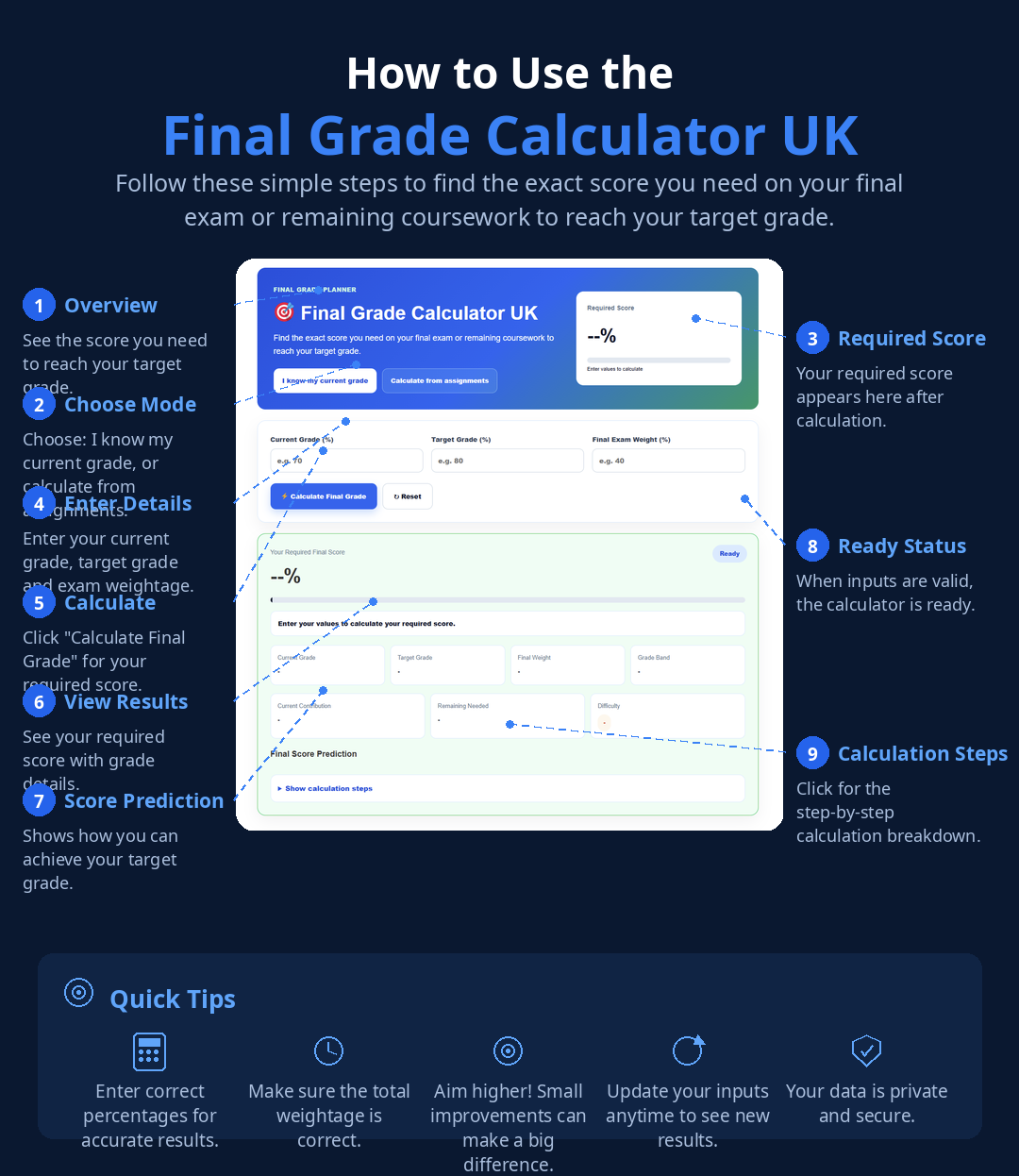
Click Here: Final Grade Calculator UK
What “course closure” actually means when you’re already enrolled
The phrase “course closure” covers several different situations, and confusing them is where most of the panic comes from. With university course closures now a regular feature of UK higher education, it helps to separate what you have heard from what actually applies to you. A course being closed to new applicants is the most common form: the university stops recruiting for it while current students finish normally. That is what Nottingham has confirmed — students currently on a closing course will be able to take their degree, while no new applicants will be admitted to those programmes.
Much rarer is a closure that displaces enrolled students mid-degree — for example, when a provider shuts entirely, or when a department closes so abruptly that teach-out is impossible. The rules below cover the full spectrum, because your rights do not depend on your university being in the news: they sit in a document your provider was required to publish long before any announcement.
| What you hear | What it usually means for enrolled students | Your grades impact |
|---|---|---|
| Course “suspended” for new entry | No new applicants taken; current students unaffected | None — this is a recruitment decision |
| Course “closed” / “withdrawn” | Current students are “taught out” to completion | Normal rules continue; module choice may narrow |
| Department closed | Programmes end after existing cohorts graduate | Same as above; staff changes may affect supervision |
| Provider closes entirely | OfS market-exit rules apply; transfer or teach-out by arrangement | Credit for completed work is protected by law-backed process |
The safety net you already have: OfS student protection plans
Every university and college registered with the Office for Students must publish a student protection plan. This is not a document invented when trouble starts — it is a condition of registration, and it is supposed to spell out, in advance, exactly what the provider will do if a course, campus or the whole institution closes. The OfS’s own guidance expects these plans to cover teach-out arrangements, transfers to other providers, credit and qualifications for partially completed study, impartial advice on next steps, complaints and compensation routes, and the archiving of student records so your attainment remains provable years later.
Nottingham’s own plan — published as part of its 2025-26 registration documents — illustrates how this works in practice. Its stated position is that teaching out will be “the usual course of action” and “always our first choice of protection measure” when a programme closes: the university commits to ensuring every currently registered student can complete their programme of study, with normal quality-assurance processes continuing through the teach-out period. Where specific modules can no longer be delivered, the university says it will ensure students can still meet the programme’s learning outcomes — which is the guarantee that matters for your marks.
Two details in that plan deserve your attention, because they are where grade risk actually hides. First, teach-out normally continues only until the date you were expected to complete when you registered — if you interrupt your studies or fail to progress on time, what happens next is decided case by case. Second, a teach-out period can come with “some restrictions on module choice”. Neither point is alarming, but both mean you should read your provider’s plan rather than assuming every detail is automatic.
What happens to the marks you’ve already earned
Nothing. That is the whole section in one word, but it bears repeating because rumour does the opposite work: your completed module marks, credits and progression decisions remain on your student record exactly as they were. A course closure does not re-mark your past work, does not invalidate your credits, and does not move your classification goalposts. The degree regulations that applied when you enrolled continue to govern your award — including the classification algorithm, condonement rules and borderline policies your university already uses.
The one genuine record-keeping risk is archival: in a full provider closure (not a single-course teach-out), the OfS’s own guidance is explicit that institutions must plan how student records — academic marks, disciplinary and fee information, fitness-to-practise confirmations — are preserved and transferred, including converting paper records to electronic files. For a course teach-out at a surviving university, this is a non-issue: the same student records system keeps running. But it is a good reason to download or screenshot your own transcript and module marks periodically while everything is calm.
The module-choice squeeze: how closures quietly change your classification maths
Here is the original point most closure coverage misses. Your old marks are safe — but your future marks get harder to optimise. Students routinely play to their strengths when choosing optional modules: the essay-heavy module if you write well, the performance module if you perform well. During a teach-out, the menu shrinks. Specialist optional modules are the first to stop running — there is no economic case for staffing a 12-student elective in a closing department — and remaining students are funnelled into whatever modules still run. Nottingham’s own protection plan flags this explicitly: teach-out extensions can carry “some restrictions on module choice”.
That matters more than it sounds, because optional modules are often where students bank their highest marks. Work through the arithmetic with a fictional second-year music student, Jasmine, whose university uses a 0:40:60 year weighting (Year 1 doesn’t count, Year 2 counts 40%, Year 3 counts 60%):
Jasmine’s completed Year 2: 120 credits finished before the closure announcement, year average 64.0%. These marks are locked in.
Her original Year 3 plan: dissertation plus her strongest electives, where her profile suggested a 69.0% average. Final classification: 0.40 × 64.0 + 0.60 × 69.0 = 25.6 + 41.4 = 67.0% — a comfortable 2:1.
Her teach-out Year 3: two preferred electives no longer run. She takes the remaining modules and averages 66.0%. Final classification: 0.40 × 64.0 + 0.60 × 66.0 = 25.6 + 39.6 = 65.2% — still a 2:1, but 1.8 percentage points lower, and suddenly within striking distance of the 2:2 borderline if anything else goes wrong.
Nothing unfair happened. Nobody changed her old marks. But the restricted menu cost her nearly two points — which is exactly why, during a teach-out, your module choices deserve more attention than ever, and why modelling the arithmetic with a calculator before you commit to a combination is time well spent. If your average is sitting in the 58–62 or 68–72 borderline bands, that 1–2 point swing can be the difference between degree classes.
Stay and be taught out, or transfer with credit?
For most students on a closing course, the choice is not “stay or fail” — it is “stay and be taught out, or transfer elsewhere with credit”. Both are legitimate, and your provider’s protection plan should spell out the transfer support on offer. Our full guide to transferring universities in the UK covers the mechanics in detail; the grade-specific points that matter here are below.
| Stay (teach-out) | Transfer with credit | |
|---|---|---|
| Marks already earned | Count normally toward your classification | Recognised for credit (RPL), but often excluded from the new university’s classification calculation |
| Module choice | May be restricted as specialist modules stop running | Full menu at the new provider — but different modules, different marking cultures |
| Resits | Handled under teach-out arrangements (see below) | Normal resit rules at the new university |
| Dissertation supervision | Risk: supervisor may leave; university must arrange alternatives | New supervisor, new topic expectations |
| Funding | Gift-year formula unaffected if you progress normally | Previous study counts against Student Finance entitlement — check before moving |
| Best for | Students in final year, or with strong marks already banked | Students early in the course who want the full subject experience elsewhere |
The row most students misunderstand is the first one. Under the common rule at most UK universities, your degree classification is calculated only from modules completed at that university. Transferring with 120 credits of recognition of prior learning gets you advanced entry — but those transferred marks typically appear on your new transcript as credit without contributing to the classification average. Work through what that means with a fictional second-year modern languages student, Daniel:
Daniel’s record at his closing university: 180 credits completed with a 66.4% average — a strong foundation.
If he stays (teach-out), 0:40:60 weighting: Year 2 average 66.4 counts at 40%, his final year averages 61.5 at 60%. Final: 0.40 × 66.4 + 0.60 × 61.5 = 26.56 + 36.90 = 63.5% — a 2:1, with his good second year doing real protective work.
If he transfers with credit: the new university recognises his 180 credits for entry into final year, but — under the common rule, which you must confirm in the receiving university’s regulations — his classification is computed only from modules taken there. His degree class then rests entirely on his final-year average of 61.5%: still a 2:1, but his two years of 66.4% banking no longer cushion anything. One bad semester at the new university, with no banked marks to absorb it, is all it takes to slip a class.
The lesson is not “never transfer”. Students transfer successfully every year, and early in a course it can be the right call. The lesson is to price the transfer correctly: you are trading a known, banked average for a fresh start, and the arithmetic of that trade should be explicit before you sign anything.
Resits, repeats and the modules that no longer exist
What happens if you fail a module that the university no longer teaches? This is the sharpest edge of a teach-out, and protection plans handle it in a few standard ways: the university runs a final resit diet for the discontinued module, substitutes an equivalent module or an alternative assessment covering the same learning outcomes, or — Nottingham’s wording — ensures you can meet the programme learning outcomes some other way. The principle is consistent: you cannot be left with a failed module and no route to repair it.
Three practical points. First, resit caps work as normal — a capped resit during a teach-out is still capped, usually at the pass mark, so the usual advice about avoiding resits where possible applies with extra force. Our guide to university referrals and resits explains the mechanics. Second, watch deadlines: a teach-out normally runs to your expected completion date, and students who fall behind schedule get case-by-case decisions rather than automatic extensions. If you think you might need to interrupt your studies, raise it early — our guide to interrupting your studies explains how interruption interacts with funding. Third, dissertation supervision: if your supervisor leaves as part of the restructure, the university must arrange a replacement, but the new supervisor’s expectations may differ — get the marking criteria in writing and keep every draft with feedback.

Fees, refunds and who to complain to
Being taught out to completion does not automatically entitle you to a fee refund — you are, after all, still getting a degree. But the OfS framework does expect providers’ plans to cover complaints and compensation where appropriate, and consumer protection law gives you rights that exist independently of any closure. If teaching quality drops materially during the teach-out — cancelled modules with no substitute, vanished supervision, facilities withdrawn — that is a service complaint first, and a compensation question second.
The escalation ladder is the standard one: raise it with your department in writing, then use the university’s formal complaints procedure, and if the outcome disappoints, take it to the Office of the Independent Adjudicator (OIA), which can recommend compensation. Keep a paper trail from the start — dates of cancelled teaching, emails about module withdrawals, any written promises about teach-out arrangements. Our guide on appealing a university grade covers the adjacent process for challenging individual academic decisions, which runs on separate regulations from complaints about the closure itself.
Your course-closure checklist: what to do this week
If your course has just been flagged for closure, work through these in order. None of them takes long, and together they convert a frightening announcement into a managed situation.
- Download your record. Save or screenshot your transcript, module marks and progression decisions to date. In a teach-out this is belt-and-braces; in a provider closure it is essential.
- Read your provider’s student protection plan. Find the teach-out section: how long it runs, what happens to module choice, and what the case-by-case provisions are for students who fall behind.
- Ask for the teach-out plan in writing. Which modules will run in each remaining year? What replaces discontinued modules? Who supervises dissertations? Get names and dates.
- Model your classification under the new module menu. Run the numbers with the restricted options — this is exactly what the Final Grade Calculator is for — and check whether the squeeze pushes you toward a borderline.
- If you’re considering transfer, price it first. Confirm with the receiving university whether transferred marks count toward classification or only toward credit, and check the Student Finance implications of previous study.
- Check the industrial-action picture separately. Closures and strikes often arrive together — Nottingham’s 30 September walkout and 5 October–11 December sustained action overlapped its restructure announcement — and strikes affect grades through different mechanisms, covered in our university strikes guide.
- Know your complaint route. Department → formal complaints procedure → OIA. Start the paper trail now, not when you’re angry later.
- Don’t panic-transfer in week one. Teach-out exists precisely so you don’t have to make a rushed decision. Read the plan, run the numbers, then decide.
Can a university close my course while I’m still studying it?
Yes, but closure almost never means enrolled students are thrown out. The standard arrangement is called teach-out: the university commits to letting every currently registered student complete their programme, while stopping new admissions. Nottingham confirmed exactly this for its closing courses. Only in a full provider closure would alternative arrangements, such as transfers, come into play, and even then the Office for Students requires the provider’s protection plan to cover credit and continuity for existing students.
Do I lose the marks I’ve already earned if my course closes?
No. Completed module marks, credits and progression decisions stay on your student record and count toward your degree exactly as before. A closure does not re-mark past work or change the classification algorithm that applied when you enrolled. Download a copy of your transcript and marks for your own records as good practice.
Will my degree classification change if my course is taught out?
The classification rules don’t change — but your future marks can, because teach-outs often restrict module choice as specialist modules stop running. If you lose the optional modules where you bank your highest marks, your final-year average can drop by a point or two, which matters at the 2:2/2:1 and 2:1/First borderlines. Model the arithmetic with the remaining module menu before you choose.
Can I transfer to another university with my credits?
Yes, through recognition of prior learning (RPL), and your provider’s student protection plan should explain the transfer support available. One warning: under the common rule at most UK universities, your degree classification is calculated only from modules completed at the awarding university, so transferred marks may count toward credit but not toward your classification average. Confirm this with the receiving university and check the Student Finance implications of previous study before moving.
What is a student protection plan?
It’s a published document every OfS-registered university and college must have, setting out what happens to students if a course, campus or the whole provider closes. It should cover teach-out arrangements, transfers to other providers, credit for partially completed study, advice on next steps, complaints and compensation routes, and how student records are archived. Find yours on your university’s website — usually in the registry or student-services section.
Will my transcript or degree certificate show that my course closed?
Normally there is no indication at all: you graduate with the same degree title, awarded under the same regulations, as if the course had never closed. Your transcript lists your modules and marks as usual. In a full provider closure, records are archived and remain accessible, and the OfS guidance requires clear information about how to access them.
What if I fail a module that is no longer taught?
Your university must give you a route to repair it — a final resit diet for the discontinued module, a substitute module, or an alternative assessment covering the same learning outcomes. You can’t be left with a failed module and no way back. Normal resit caps still apply, so avoiding resits matters even more during a teach-out, and teach-out extensions are decided case by case if you fall behind schedule.
Can I get a fee refund if my university closes my course?
Being taught out to completion doesn’t automatically entitle you to a refund, since you’re still receiving a degree. But if teaching quality drops materially — cancelled modules with no substitute, vanished supervision — you can complain through the university’s formal procedure and then to the Office of the Independent Adjudicator, which can recommend compensation. Keep a written record of every disruption from the start.
Conclusion
A course closure feels like the ground moving under your degree, but the legal architecture around UK higher education — and around university course closures specifically — was built for exactly this situation. Your earned marks are safe, your classification rules don’t change, and your provider already owes you a written plan for finishing what you started. The students who come out of teach-outs well are the ones who treat the announcement as a planning exercise rather than a catastrophe: read the protection plan, model your classification under the new module menu, price a transfer honestly before taking one, and keep a paper trail of everything.
The Nottingham case also carries a wider lesson for the sector. With 560 jobs going, two departments closing and dozens of MRes programmes cut, closures are no longer rare events that happen to other people — they are a normal feature of a financially pressured system, and the autumn of 2026 has shown they can arrive alongside strikes, marking boycotts and restructures all at once. Knowing your teach-out rights before you need them is now part of being a well-informed student, in the same way that knowing your extenuating circumstances or appeal rights is. Bookmark your provider’s student protection plan today; it is the document you hope never to use.


![Read more about the article Can You See Your Marked Exam Scripts? UK Student Rights Explained [2026]](https://gradeforuni.com/wp-content/uploads/2026/10/featured-exam-scripts-uk-300x192.png)