
Your University Hasn’t Released Your Marks: What Happens to Your Degree [2026]
On 16 October 2026, the dispute at Goldsmiths, University of London passed 130 days — reported as the longest strike in UK higher-education history, overtaking the previous record of 129 days of walkouts at the University of Brighton in 2023. But for the students caught inside it, the headline is not the record. It is the empty results page. The union says hundreds of Goldsmiths students are still waiting for marks, with dozens unable to graduate; the university says 98.5% of students received an academic outcome and only 2% of marks are outstanding. When the two sides disagree this sharply, one question matters more than any other: what happens to your degree if your marks are never released?
This guide answers that question — not the politics of the dispute, but the machinery underneath it. UK exam boards have a well-worn set of contingency rules for missing marks, and the 2026 boycotts have now road-tested three of them in public: averaged or predicted marks at Nottingham, credit on aggregate at Edinburgh, and exceptional academic regulations at Goldsmiths. Below you will find what each model does to your final classification, two worked examples showing the arithmetic of missing marks, what delays mean for graduation, jobs, masters places and visas, and the exact steps to take if you are still waiting.
The short version: withheld marks very rarely mean a withheld degree. Boards can award classifications on the evidence that does exist, exclude missing marks from the calculation, or defer the award until marking is complete. But the contingency is not neutral — as one Edinburgh student’s downgraded First shows, how your board handles the gap can move your class. Understanding the rules before you accept any offer your university makes is the single most useful thing you can do.
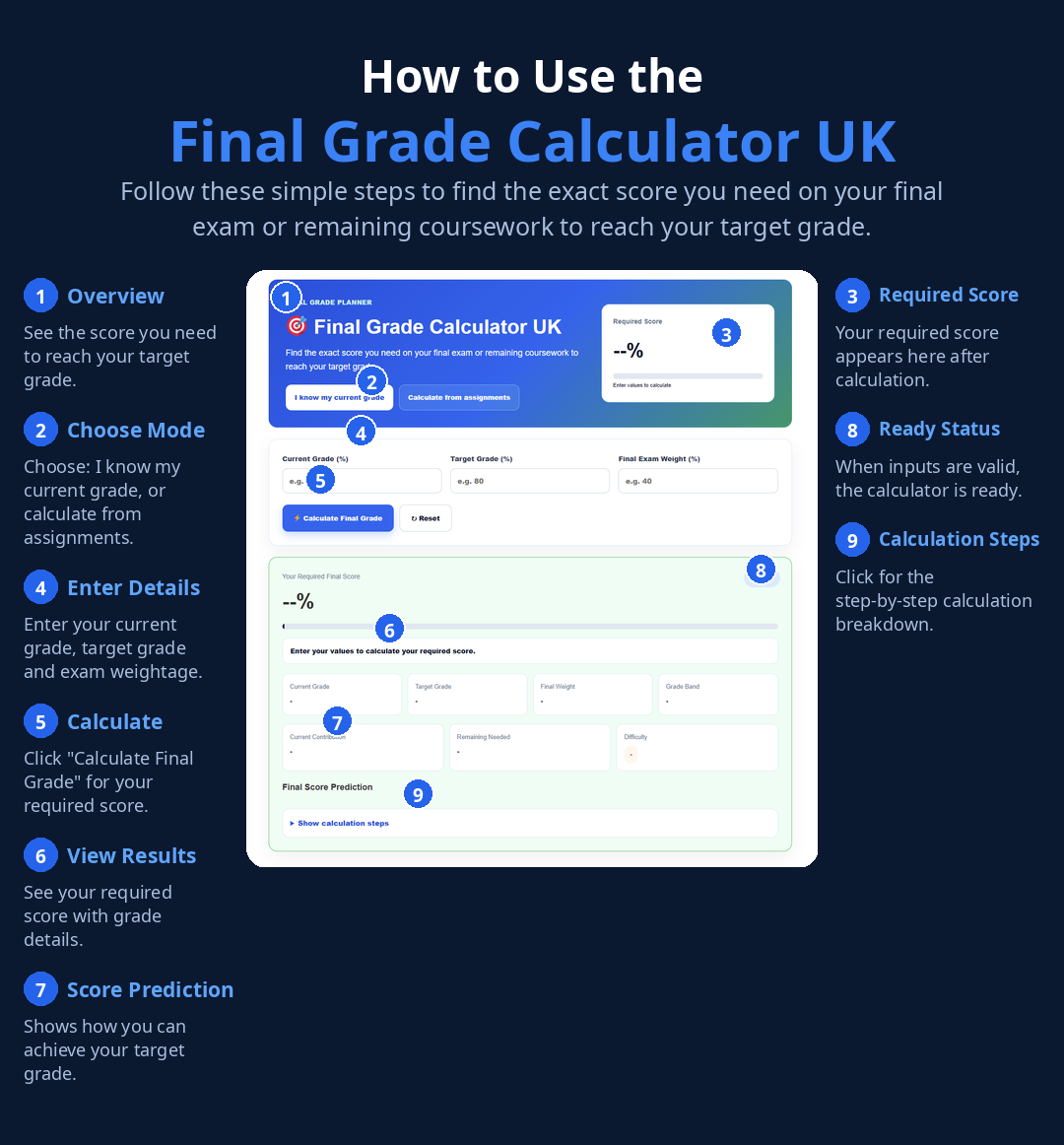
Click Here: Final Grade Calculator UK
Why marks go missing: the five reasons UK universities withhold results
A blank results portal is not always a strike. Universities hold marks back for several distinct reasons, and the reason determines your rights — so identify which one applies to you before you act.
| Reason marks are missing | What is actually happening | What it usually means for you |
|---|---|---|
| Marking and assessment boycott (industrial action) | Staff refuse to mark or submit marks as part of a trade dispute. In 2026 this hit Goldsmiths, Nottingham and Edinburgh. | Exam-board contingency rules kick in: averaged or predicted marks, credit on aggregate, or deferred awards. |
| Moderation and external-examiner sign-off still incomplete | Second marking, moderation or the external examiner’s sampling has not finished. | Your marks are provisional until the exam board meets. This is routine — most students see it for dissertations. |
| Academic misconduct investigation | Marks are held while an allegation is investigated. | No outcome until the process concludes; see our guide to academic misconduct at UK universities. |
| Administrative hold (unpaid fees, library fines) | The university withholds certificates or transcripts, not usually the marks themselves. | Pay or dispute the debt through the finance office; marks are typically released once it is cleared. |
| A marking error under review | The department has spotted a possible error and pulled the marks back for correction. | Short delay; our guide to checking your university calculated your marks correctly shows how to audit your own figures. |
The rest of this article is about the first row — industrial action — because it is the only reason that can leave hundreds of students without marks for months, and it is the one playing out right now. At Goldsmiths, the student-union education officer said hundreds of students had been unable to enrol for the next year because their marks had not arrived, with some blocked from bursary funding and student finance; more than 50 postgraduate fine-art students wrote an open letter saying second-year MFA students had still received no marks or feedback from interim assessments, while facing a 31 October fee deadline after which the university said it would withdraw them.
The 2026 disputes: what actually happened at three universities
Only three UK universities ran marking and assessment boycotts in 2026, according to Times Higher Education’s September reporting — Goldsmiths, Nottingham and Edinburgh. Each used a different contingency machine, and the differences matter for your degree. This section reports each side’s claims as claims: where the union and the university disagree on the scale of the disruption, you will see both numbers.
Goldsmiths: 130 days and counting
Members of the Goldsmiths University and College Union began action short of a strike — including a marking and assessment boycott — on 27 April 2026, moving to indefinite full strike action on 8 June. The dispute is over the university’s “Future Goldsmiths” restructuring programme, which targets £22 million in savings by the end of 2026/27 with proposed academic redundancies — the third restructure in five years. Management imposed full, 100% pay deductions on participating staff, which the union described as a lockout. On 16 October the action passed 130 days, reported by Times Higher Education and The Art Newspaper as the longest strike in UK higher-education history, passing Brighton’s 129 days (one outlet framed the record specifically as the union’s claim).
The student impact is where the accounts diverge. The union’s branch chair said hundreds of students were still waiting for marks, with dozens unable to graduate. The university counters that 98.5% of students received an academic outcome for 2025–26, with only 2% of marks outstanding and fewer than 2% of modules affected — and it approved “Exceptional Academic Regulations” to carry students through the boycott. There is movement at the top: a new vice-chancellor, Joanna Newman, formerly provost of SOAS, started in September 2026; management’s 7 October offer — a moratorium on compulsory redundancies into 2027, voluntary severance and staggered salary reductions — was rejected on 8 October, with Acas-facilitated talks continuing. As of mid-October the dispute was unresolved.
Nottingham: averaged or predicted marks
Nottingham’s marking and assessment boycott began on 20 May 2026, after a local ballot in April, in response to the “Future Nottingham” restructure — 2,700 staff at risk of redundancy, with 600-plus full-time-equivalent job cuts and 560 confirmed at the start of October. Management threatened 100% pay deductions for boycott participants. The university’s contingency was to offer students “averaged or predicted marks, depending on how much was yet to be evaluated”, in place of assessments that had not been marked.
Students had about a week over the summer to accept or reject the offer, and the decision was binding in one direction: work covered by accepted contingency marks would never be marked later. The union’s branch president said students felt pressured into accepting. Twenty students who rejected the offer were still unable to graduate or progress as of late September 2026 — the university confirmed the cases and said it expected them to be resolved shortly. The knock-on effects were wide: full summer graduation ceremonies were cancelled and replaced with celebration events; marking delays held up student-finance payments; some students only learned whether they had passed the year on 22 September; late marks put job and postgraduate offers at risk; and a student journalist told The Times that many graduating students left without receiving their degree certificates. Nottingham’s union has since announced around 67 days of further strike action across the autumn term, running from 30 September to 11 December.
Edinburgh: credit on aggregate
Edinburgh’s marking and assessment boycott ran from 1 May to 1 September 2026, part of a dispute over £140 million in cuts and around 1,800 job losses, with management again imposing 100% pay deductions. The university senate approved “temporary variations” to its taught assessment regulations: honours students could receive a simple pass/fail, and boards could award “credit on aggregate” — pass credits for unmarked courses — where industrial action meant no course outcome was available. The established mechanism behind it, from earlier Edinburgh regulations, requires passed marks in at least 80 credits and an overall average of 40% or above, with missing or unreliable marks excluded from the classification calculation; the full 2026 temporary-variation wording was not published, so treat the principle rather than the exact thresholds as the lesson.
The human cases were reported by The Times that summer. Juliet Grey, a final-year philosophy and psychology student, received an unclassified degree and feared her application to study in Germany on a student visa would fail. Delilah Wilson, final-year philosophy, had a First downgraded to a 2:1 because of two unmarked modules — her formal letter said she had been given “credits on aggregate for courses she had failed”. Students heading into job interviews or needing exact results for postgraduate offers faced real uncertainty, and the university would not guarantee final marks to graduating students applying for further study. Two regulators are now circling the sector: the Quality Assurance Agency is reviewing awarding systems at higher-education institutions in Scotland, including Edinburgh, and the Home Office exercised operational discretion so students could apply for the Graduate Route while waiting for results. Edinburgh said the boycott was “not widespread” and that the vast majority of students received marks, with only a very small proportion still outstanding in late September — before its union announced five weeks of further strike action from 28 September to 30 October.
Three universities, three different contingency machines — but the same underlying question for every affected student. What, exactly, is an exam board allowed to do when the marks it needs do not exist? Our earlier guide to whether university strikes affect your grades covered the 2026 strike wave in general; this article goes inside the exam-board machinery itself.
What the exam board can actually do with withheld marks
When marks go missing, the exam board does not improvise — it reaches for contingency powers that most universities wrote into their regulations years ago. The sector practice was described to Parliament during an earlier dispute: universities reallocate marking to other staff and hire external markers; many award degrees where there is enough evidence of prior attainment; others assign provisional grades so students can progress, with final classifications that “either remain as provisionally assigned or are uplifted” once marking completes. Where the evidence is insufficient, the award is deferred. In plain terms, the board has five moves:
| The board’s move | Used in 2026 by | What it means for your classification | Can it change later? |
|---|---|---|---|
| Wait and re-mark | All three (external markers hired; union questioned the spend at Goldsmiths) | You get your real marks, just late. The classification is computed normally. | No — once marked, the mark stands. |
| Averaged or predicted marks | Nottingham | The board offers a substitute mark for unmarked work; you accept or reject it. | No — accepted marks are final and the work is never marked later. |
| Credit on aggregate | Edinburgh | Pass credits for unmarked courses; missing marks excluded from the classification maths. | Your confirmed marks can still be added; the aggregate decision stands on the evidence available. |
| Provisional grade, then confirm or uplift | Sector practice described to Parliament | A provisional grade lets you progress or graduate; the final classification stays the same or goes up. | Yes — upward only, once marking completes. |
| Deferred award (no classification yet) | Edinburgh precedent; Goldsmiths ‘dozens unable to graduate’ per the union | No degree class is awarded until the board has enough evidence. | Yes — you are classified when the marks arrive. |
Two things to notice. First, none of these treats a missing mark as a zero — that is the single most common fear, and it is not how boards work. Second, the options are not equally kind. A provisional grade that can only be uplifted is the gentlest; an averaged mark you must accept-or-reject in a week, with no later review, is the hardest. That is why the next section matters: the arithmetic shows you exactly what is at stake in the choice.
Worked example 1: credit on aggregate and your classification
Take Amara, a final-year student on a standard six-module year — six 20-credit modules, 120 credits. Four modules are marked: 64, 58, 71 and 66. Two modules, 40 credits, are unmarked because of the boycott. All four marked modules are passes, so she clears 80 passed credits, and her average on the known marks is (64 + 58 + 71 + 66) ÷ 4 = 64.75%. Under a credit-on-aggregate model, the board awards pass credits for the two unmarked modules and computes her classification on the evidence it has: 64.75% — a 2:1.
Now the counterfactuals, because this is where the contingency’s neutrality breaks down. Suppose Amara’s two missing modules, when finally marked, would have been 42 and 45. Her true average would have been (64 + 58 + 71 + 66 + 42 + 45) ÷ 6 = 346 ÷ 6 = 57.67% — a 2:2. The board’s estimate flattered her by a full class. But reverse it: suppose the missing marks would have been 74 and 70. Her true average would have been (259 + 144) ÷ 6 = 403 ÷ 6 = 67.17% — still a 2:1, but nearly two and a half points higher, and within touching distance of a First under a borderline rule. The estimate cost her.
Neither counterfactual is knowable in advance — that is precisely the gamble. Boards exclude missing marks rather than guessing them, which protects you from phantom fails, but any substitute for real marking is still an estimate built on incomplete evidence. Model your own position on the marks you do have with our Degree Classification Calculator UK: enter your confirmed modules, and see which boundary you sit near before you accept anything.
Worked example 2: Nottingham-style — accept the averaged mark or wait?
Now James, offered an averaged mark of 58 for his 30-credit dissertation while his other final-year modules average 63. His university weights Year 2 at 30% and Year 3 at 70%, and his Year 2 average was 60. If he accepts the 58, his final-year average becomes (58 × 30 + 63 × 90) ÷ 120 = (1,740 + 5,670) ÷ 120 = 61.75%. His degree classification is then (60 × 0.30) + (61.75 × 0.70) = 18 + 43.225 = 61.23% — a 2:1.
If he rejects the offer and waits, and the real dissertation mark comes back as 68, his final-year average becomes (68 × 30 + 63 × 90) ÷ 120 = (2,040 + 5,670) ÷ 120 = 64.25%, and his degree becomes 18 + 44.975 = 62.98% — still a 2:1, but 1.75 points higher. And if James had been sitting at 59.4% on the accept path — a 2:2 — the same 68 on the wait path could have carried him over the 60 boundary into a 2:1. That is the real shape of the decision the 20 Nottingham students who rejected the offer were weighing: a certain mark now against an uncertain mark later, with a whole degree class potentially riding on the difference and no guaranteed timeline for the wait.
Can you still graduate on time?
The ceremony and the award are two different things, and 2026 proved it. Nottingham cancelled its full summer graduation ceremonies and replaced them with celebration events — students could mark the moment without the degree in hand. A student journalist told The Times that many Nottingham graduates left without receiving their degree certificates at all. Your transcript, meanwhile, will typically show pending marks as pending: honest, but not what a postgraduate admissions tutor wants to see.
The sharpest edge is the unclassified degree. Juliet Grey’s case at Edinburgh — an unclassified award where a classified one was expected — shows what happens when the board cannot assemble enough evidence: you graduate, but without the First, 2:1 or 2:2 that employers and universities screen for. She feared her German student-visa application would fail on it. The Times reported that Edinburgh would not guarantee final marks to graduating students applying for further study, and students heading into job interviews faced the same uncertainty.
Then there is the money. At Goldsmiths, the student-union education officer said hundreds of students had been unable to enrol for the next year without their marks, with some blocked from bursary funding and student finance; at Nottingham, marking delays held up student-finance payments and some students only learned whether they had passed the year on 22 September. If your funding, your visa or your next course depends on a result you do not have, tell the relevant body early — the Home Office showed operational flexibility on the Graduate Route during the 2026 boycott, but only for students whose situation was documented.

Your rights: the seven-step checklist
If your marks are still missing, work through these in order. Each step is grounded in the actual 2026 cases — not generic advice.
1. Read your university’s official contingency page. Goldsmiths published an industrial-action page and Exceptional Academic Regulations; your university will have an equivalent. The published rules — not rumour — govern what the board can offer you.
2. Get any accept-or-reject offer in writing before you decide. Nottingham’s lesson is the sharp one: students had about a week, and accepted marks were final — the work was never marked later. Ask explicitly: is this binding? Will the work ever be marked? What is the deadline? Do not decide on a verbal summary.
3. Use the academic appeal route for marking and progression decisions. Appeals must be framed on procedural grounds — that the regulations were not followed — not on disagreement with academic judgement. Our guide to how to appeal a university grade walks through grounds, evidence and deadlines.
4. Make a formal complaint and complete the internal process. You will need the Completion of Procedures letter to escalate — without it, the external ombudsman cannot take your case.
5. Escalate to the OIA if you are in England or Wales. The Office of the Independent Adjudicator is free and independent. It cannot stop industrial action, but it can review how your provider handled the disruption — and it may recommend compensation, including fee-based refunds and distress-and-inconvenience sums. One industrial-action complaint (case CS092404) has already been upheld as justified. Scottish universities sit outside the OIA scheme, so Edinburgh students use their provider’s process and the Scottish ombudsman route instead. (OIA industrial-action guidance for students)
6. Know the compensation picture — and its limits. In April 2025 the Office for Students told providers they should pay appropriate compensation where contingency plans fail — explicitly including materially delayed assessment marking and delayed qualification awards, especially where jobs, further study or visas are affected — and to proactively identify eligible students. Note the word: should, not must. It is a regulatory expectation, not a guaranteed entitlement. After the 2023 boycott, Bristol paid £500 goodwill payments and Brighton offered free graduation ceremonies; no verified 2026 payout to an individual student for withheld marks has been reported. (Wonkhe on the OfS industrial-action principles)
7. Never pay anyone who offers to ‘fix’ your marks. Delays create a market for cons: no legitimate marker ever takes payment to change a result. Our guide to UK student scams covers the fake grade-portal emails doing the rounds. And if you suspect the marks you did receive are wrong, extenuating circumstances and remark routes exist — use the official ones.
Five myths about withheld marks
Industrial action breeds rumour. These five claims circulated during the 2026 disputes — here is what the evidence actually says.
| The myth | The reality |
|---|---|
| “No marks means no degree.” | Boards have formal contingency powers — averaged marks, credit on aggregate, provisional grades, exceptional regulations. The great majority of affected students in 2026 still graduated; only where evidence was genuinely insufficient were awards deferred. |
| “The university just makes up your marks.” | Substitutes are formal exam-board decisions under published regulations, not inventions. Nottingham’s averaged marks and Edinburgh’s credit on aggregate were minuted board mechanisms — which is also why they can be appealed on procedural grounds. |
| “If I accept contingency marks, they’ll review them later.” | Not necessarily. At Nottingham, accepted averaged or predicted marks were final — the work was never marked afterwards. Always ask whether acceptance is binding before you decide. |
| “I can sue the university for compensation.” | The realistic routes are the OfS’s expectation that providers should compensate where contingency fails, and the OIA’s power to recommend compensation in upheld complaints. Neither is a guaranteed payout, and consumer-law arguments turn on your specific contract. |
| “Strikes only affect teaching.” | The 2026 marking boycotts show otherwise: delayed results held up graduation, degree certificates, student-finance payments, job offers, postgraduate places and — in at least one case — a student-visa application. |
Can my university graduate me without all my marks?
Yes — exam boards have formal contingency powers for exactly this situation, and most students affected by the 2026 boycotts still graduated. The models used this year were averaged or predicted marks at Nottingham, credit on aggregate at Edinburgh, and exceptional academic regulations at Goldsmiths. Where the board does not have enough evidence to classify you fairly, it defers the award instead — you graduate later, not never. Use our Final Grade Calculator UK to model your classification on the marks you do have.
What does ‘credit on aggregate’ mean?
It is the contingency Edinburgh used during its 2026 marking boycott: the exam board awards pass credits for unmarked courses where it is satisfied your overall performance passes, and excludes the missing marks from your classification calculation. The established mechanism (from earlier Edinburgh regulations) requires passed marks in at least 80 credits and an overall average of 40% or above — the full 2026 temporary-variation wording was not published, so treat the principle, not the exact thresholds, as the takeaway. Where evidence was thinner, some students received unclassified degrees.
What were Nottingham’s ‘averaged or predicted marks’?
During the marking boycott that began on 20 May 2026, Nottingham offered students averaged or predicted marks in place of assessments that had not been marked. Students had about a week over the summer to accept or reject the offer — and the crucial detail is that accepted marks were final: that work would never be marked later. Twenty students who rejected the contingency were still unable to graduate or progress as of late September 2026, while the university said it expected their cases to be resolved shortly.
Can withheld marks stop me starting a job or a masters?
In practice, yes — employers and postgraduate admissions teams usually want a confirmed classification, not a promise. During the 2026 boycotts, Edinburgh students heading into job interviews or needing exact results for postgraduate offers faced real uncertainty, and one student’s unclassified degree put a German student-visa application at risk. The Home Office exercised operational discretion on the Graduate Route during the boycott. If you are affected, ask your registry for a formal letter explaining the delay and keep every email — admissions teams deal with this every dispute cycle.
Will I get compensation if strikes delay my marks?
There is a regulatory expectation, not a guaranteed entitlement. In April 2025 the Office for Students told providers they should pay appropriate compensation where contingency plans fail — explicitly including materially delayed assessment marking and delayed qualification awards, especially where jobs, further study or visas are affected. After the 2023 boycott, Bristol paid £500 goodwill payments and Brighton offered free graduation ceremonies. Separately, the ombudsman for England and Wales (the OIA) may recommend compensation, including distress-and-inconvenience sums, in upheld complaints. No verified 2026 payout to an individual student for withheld marks has been reported.
Can I complain about strike disruption to my studies?
Yes, and there is a defined route. Complain to your university first and complete its internal procedures — you will need the Completion of Procedures letter. In England and Wales you can then take the complaint to the Office of the Independent Adjudicator (OIA), which is free; it cannot stop industrial action, but it can review how your provider handled the disruption, and one industrial-action complaint (case CS092404) has already been upheld as justified. Scottish universities sit outside the OIA scheme, so Edinburgh students use their provider’s process and the Scottish ombudsman route instead.
Could missing marks lower my degree classification?
The contingency is not neutral, so it can. Exam boards normally exclude missing or unreliable marks from the classification calculation rather than treating them as fails — but the substitute is still an estimate. At Edinburgh in 2026, one final-year philosophy student saw a First downgraded to a 2:1 because of two unmarked modules handled through credit on aggregate. The sector practice described to Parliament is kinder in one direction: provisional grades are confirmed or uplifted once marking completes — they either stay as provisionally assigned or go up.
What should I do if my marks still haven’t been released?
Work through the checklist in this article: read your university’s official contingency page, get any accept-or-reject offer in writing before you decide, use the internal appeal and complaint routes, and escalate to the OIA (England and Wales) if the internal process fails you. Meanwhile, model your likely classification on the marks you do have with our Final Grade Calculator UK so you know which boundary you are near — and never pay anyone who offers to ‘fix’ your marks, because no legitimate marker ever takes payment to change a result.
Conclusion
The Goldsmiths dispute passing 130 days — reported as the longest strike in UK higher-education history — is a record nobody wanted, and the students waiting months for marks are paying the highest price for it. But the exam-board machinery underneath the dispute is older and more robust than the headlines suggest. Universities have now used every tool in the contingency box in public: averaged or predicted marks at Nottingham, credit on aggregate at Edinburgh, exceptional regulations at Goldsmiths, provisional grades that can only be uplifted, and — where the evidence truly is not there — deferred awards.
If you take one thing from this guide, take the decision discipline. A missing mark is not a zero, a contingency offer is not always binding, and an estimate built on four modules is not the same as your real degree. Read the published regulations, get every offer in writing, model your classification on the marks you do have with our Final Grade Calculator UK and Degree Classification Calculator UK, and use the complaint routes — internal first, then the OIA in England and Wales — if the process fails you. The dispute will end; your transcript is permanent. Make sure the machinery worked for you, not just around you.